
LSA-662
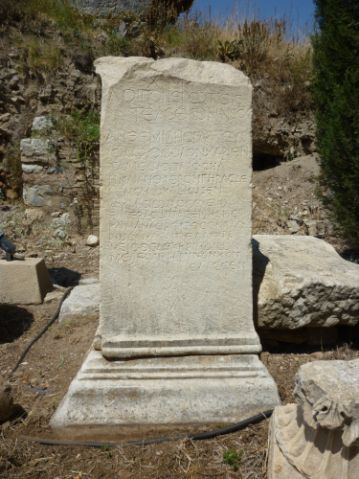
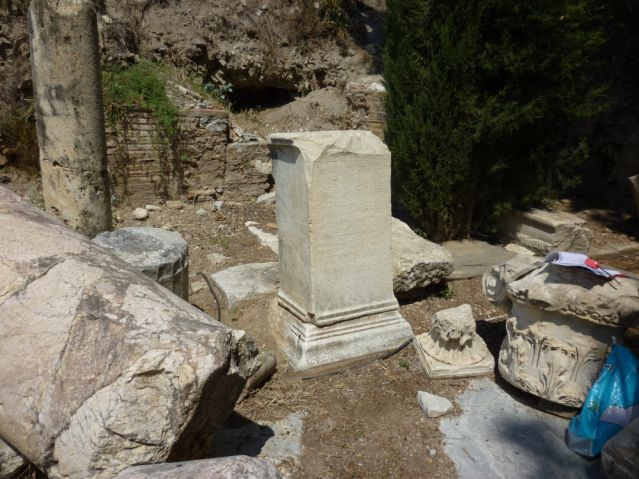
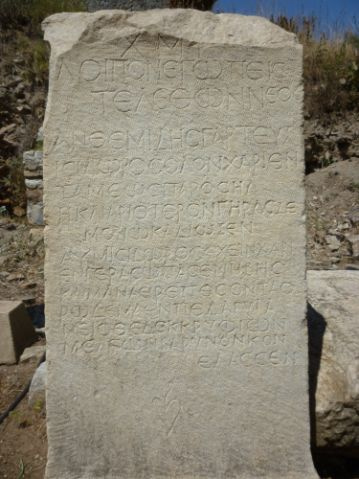
Base for statue of Piso, re-erected by Flavius Anthemius Isidorus. Ephesus (Asia). Early fifth century.
Record details
Photographs
Inscription
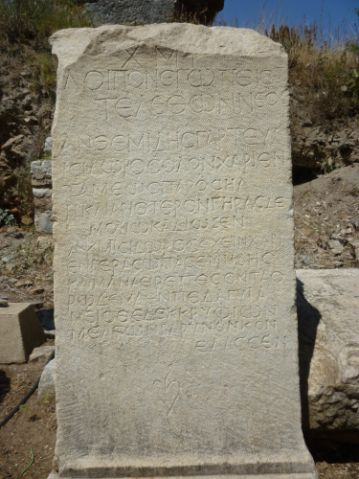
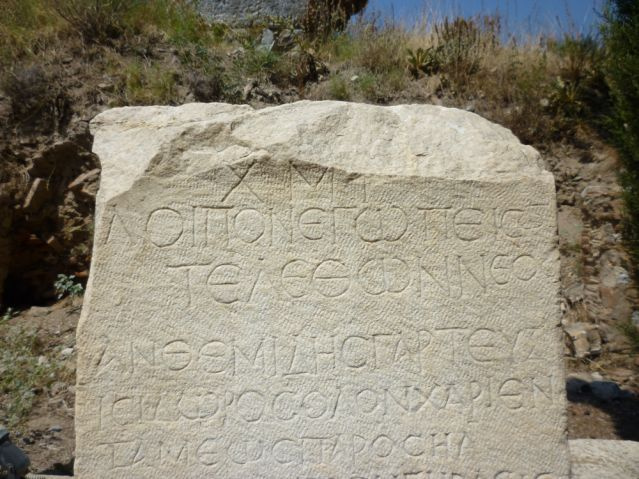
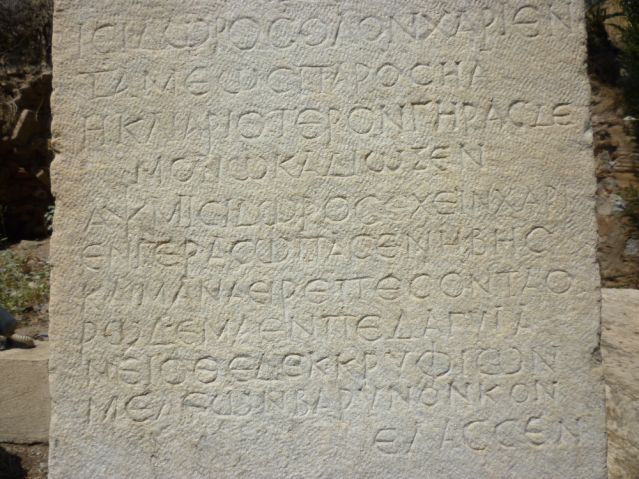
Χ(ριστὸς ἐξ) Μ(αρίας) γ(εννηθείς) / λοιπὸν ἐγὼ Πείσω(ν) / τελέθω νέος· / Ἀνθεμίδης γὰρ τεῦξ’ / (5) Ἰσίδωρος ὅλον χαρίεν/τά με, ὡς πάρος ἦα / ἢ καὶ ἀρ(ε)ιότερον· γῆρας δ’ ἐ/μὸν ὦκα δίωξεν / ἄψ μ’ Ἰσίδωρος ἔχειν χαρί/εν γέρας ὤπασεν ἥβης /
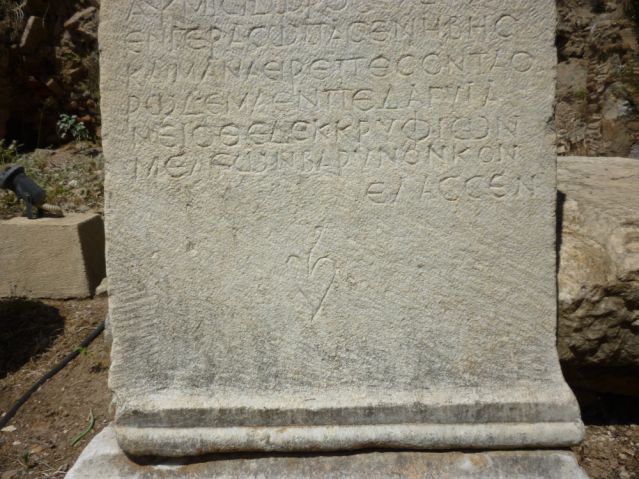
(11) καὶ μ’ ἀνάειρε πεσόντα, ὁ/ρῶ δ’ ἐμὰ ἔνπεδα γυῖα· / νειόθε δ’ ἐκ κρυφίων / μελέων βαρὺν ὄνκον /(15) ἔλασσεν.
Inscription translation
Mary gave birth to Christ.
For the rest of time I Peison will remain young. For Isodorus son of Anthemius made me, full of grace, as I used to be and even stronger. Swiftly he drove away old age, and Isodorus made me have the graceful gift of youth. And after I had fallen he lifted me up and I can see my firm limbs. And from the bottom up, he removed heavy weight from the hidden limbs. (Trans: A. Chaniotis)
Bibliography
- Knibbe, D. Die statuarische Wiederauferstehung des Kaiserpriesters Ti. Claudius Piso
Diophantos unter dem christlichen Statthalter Fl. Anthemius Isidorus, Knibbe , D. & H. Thür (eds.), Via Sacra Ephesiaca II, BerMatÖAI 6, Vienna 1995, 100-2 - Merkelbach, R. and J. Stauber (eds.), Steinepigramme aus dem griechischen Osten. Bd. 1. Die Westküste Kleinasiens von Knidos bis Ilion , Stuttgart 1998, 304-305, no. 03/02/13
Discussion
INSCRIPTION
Verse inscription of six hexameters laid out in 14 lines, and an introductory formula, in all 15 lines:
Χ(ριστὸς ἐξ) Μ(αρίας) γ(εννηθείς) /
λοιπὸν ἐγὼ Πείσω(ν) / τελέθω νέος· / Ἀνθεμίδης γὰρ
τεῦξ’ / (5) Ἰσίδωρος ὅλον χαρίεν/τά με, ὡς πάρος ἦα /
ἢ καὶ ἀρ(ε)ιότερον· γῆρας δ’ ἐ/μὸν ὦκα δίωξεν /
ἄψ μ’ Ἰσίδωρος ἔχειν χαρί/εν γέρας ὤπασεν ἥβης /
(11) καὶ μ’ ἀνάειρε πεσόντα, ὁ/ρῶ δ’ ἐμὰ ἔνπεδα γυῖα· /
νειόθε δ’ ἐκ κρυφίων / μελέων βαρὺν ὄνκον /(15) ἔλασσεν.
'Christ was born of Mary. For the rest of time I Peison will remain young. For Isodorus son of Anthemius made me, full of grace, as I used to be and even stronger. Swiftly he drove away old age, and Isodorus made me have the graceful gift of youth. And after I had fallen he lifted me up and I can see my firm limbs. And from the bottom up, he removed a heavy weight from the hidden limbs.' (Trans: A. Chaniotis)
Letter height: 4.4 cm (in the first three lines), diminishing to 1.7 cm in the last line. Below the inscription, in the centre, is a single ivy leaf (hedera).
DESCRIPTION
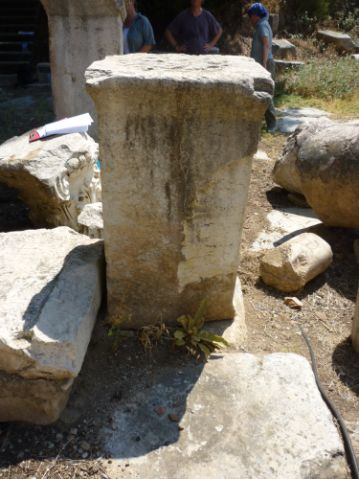
White marble base: H 134 , W c. 80, D c. 75 cm. Shaft: W 53, D 58 cm.
Rectangular shaft with simple bottom profile, placed on base moulding with smooth profiles. Shaft broken above inscription.
PROVENANCE AND CURRENT LOCATION
The inscription was found in 1990 on the west side of the street linking the theatre and the stadium. It is today set up close to its findspot.
HONORAND, AWARDER AND DATE
Our inscription records the re-erection of a statue to a man named Peison (or Piso in Latin). He is assumed, probably rightly, to be Tiberius Claudius Piso, an imperial priest of the 2nd century, who is known elsewhere in the epigraphic record from Ephesus.
Our inscription provides no information on the rank or office of the Isidorus responsible for re-erecting Piso's statue. However, the fact that he is called 'the son of Anthemius' (line 4), makes it certain that he was Flavius Anthemius Isidorus, governor (proconsul) of Asia at a date between 405 and 410, and praetorian prefect of the East in 435-6 (PLRE II, 631-3 Fl. Anthemius Isidorus 9; see also LSA-725 and LSA-729). Our statue must therefore have been re-erected in the earlier 5th century.
FURTHER DISCUSSION
The re-erection, in the early 5th century, of the statue of an imperial priest of the 2nd century is highly unusual; there is no evident reason why this was done (furthermore there is something of an irony in the fact that an inscription recording the repair of a pagan priest's statue opens with a Christian invocation). Perhaps Piso was an ancestor of Anthemius (though, if so, we might expect it to be stated), or perhaps the statue was a notable object in the cityscape (as suggested by Roueché 2006, 240).
Discussion references
- Radet, G., Inscriptions de Lydie, Bulletin de Correspondance Hellénique 11, 1887, 445-84
- Radet, G., Inscriptions de Lydie, Bulletin de Correspondance Hellénique 11, 1887, 445-84
- Rouechè, C., Written Display in the Late Antique and Byzantine City, Jeffrey, E., (ed.), Proceedings of the 21st International Congress of Byzantine Studies, London, 21-26 August 2006, Vol. I Plenary Papers, London 2006, 235-253
Cite: Last Statues of Antiquity, LSA-662 (A. Sokolicek).