
LSA-680
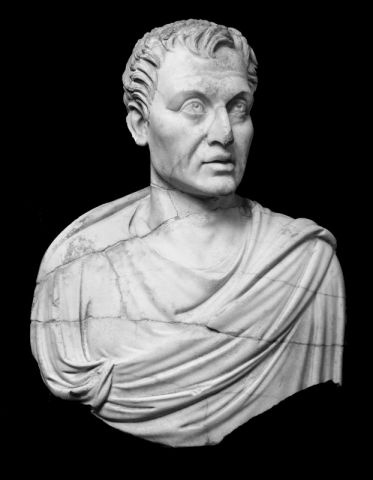
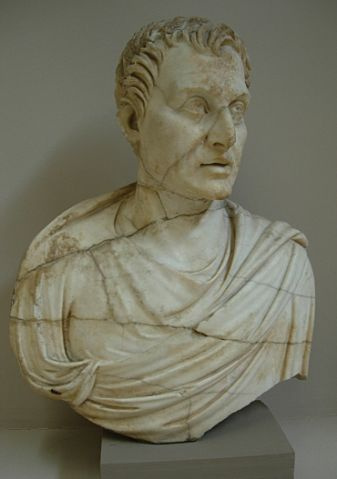
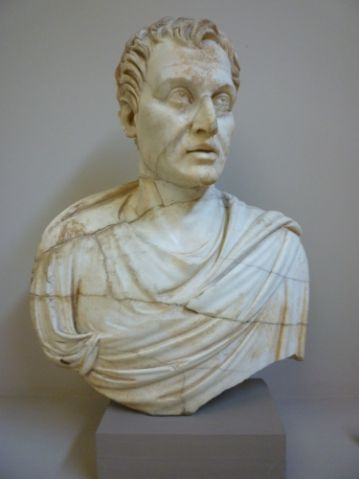
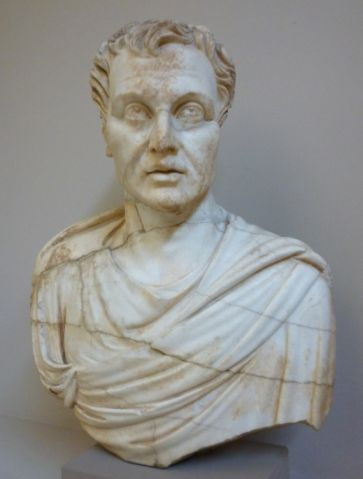
Bust of Menander (died c. 290 BC). Ephesus (Asia). Fourth century.
Record details
Photographs
Bibliography
- Inan, J. and E. Rosenbaum, Roman and Early Byzantine Portrait Sculpture in Asia Minor, Oxford 1966, 146-7, no. 187, pl. 101.2, 109
- Miltner, F. '22. Vorläufiger Bericht über die Ausgrabungen in Ephesos', Jahreshefte des Österreichischen Archäologischen Institutes in Wien 44, 243-314, Vienna 1959, Beibl. 324, fig. 167
- Richter, G.M.A., The Portraits of the Greeks, London 1965, 233, no. 47, fig. 1636
Discussion
DESCRIPTION (Object)
Life-size bust, H: 60.5, W: 47, D: 25 cm. Height of head, chin to crown: 24.5 cm. Width of head: 19.5 cm. Fine-grained white marble.
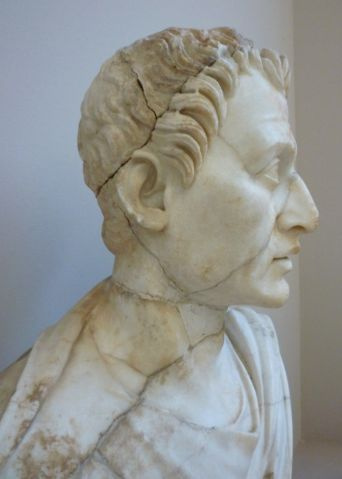
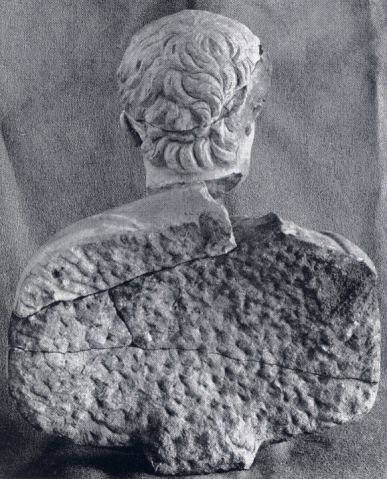
Broken in six fragments, with additional cracks: the bust in four fragments, the head in three. Crown of head was worked separately. Lower part of bust on proper left side is missing. Tip of nose and rims of both ears are chipped.
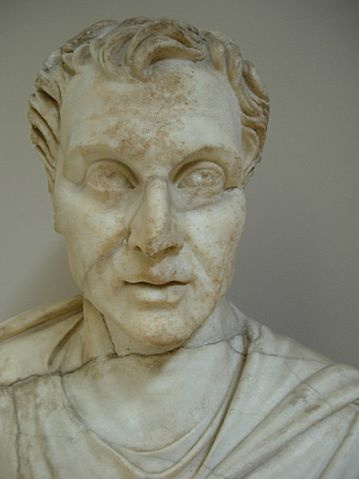
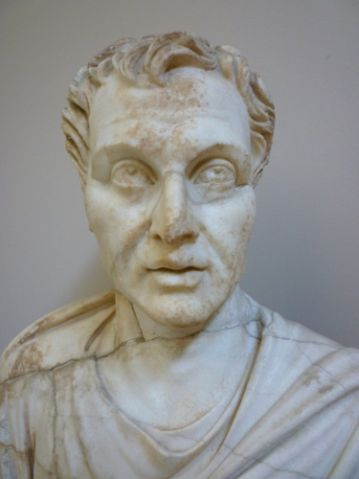
Flesh surfaces and garments polished, hair rough. Locks are separated by deep drill-channels. Irises are incised as three-quarters of a circle. Pupils are hollowed out in crescent shape. Back of bust is roughed chiselled, hollowed out, but without a spine.
PROVENANCE
The bust was found in the debris of the Baths of Scholasticia in 1957 (beginning of September).
DESCRIPTION (Subject)
Portrait bust of Menander, the Athenian comedy poet of the early Hellenistic period (died c. 29o BC). The bust wears a himation and chiton, with the himation pulled tightly across the chest from under the proper right armpit, in a distinctively late antique manner.
The portrait shows a beardless man, with his head turned to his left and slightly inclined. The hair is brushed forward in coarse locks towards the forehead. In the middle of the forehead are two sickle-shaped locks. There are two horizontal grooves in the high forehead. The raised eyebrows form sharp arched ridges. The eyes have heavy upper lids. The tear ducts are pronounced. Deep, well-modeled nasolabial grooves. Mouth with full lips slightly open. Prominent projecting chin.
The bust is a farreaching late antique reinterpretation and re-modeling of the Menander portrait set up in the Theatre of Dionysos in Athens in the early third century BC. The hair scheme has been greatly simplified and the face has been enlivened with a new wide-eyed, open-mouthed expression and a heavily manipulated physiognomy -- taller and more gaunt.
DATE
Miltner dated the bust at the beginning of the third century. Oberleitner decided for a Constantinian date. Both scholars thought the head was a private portrait of this period. Richter recognised that it is a version of the famous Menander portrait. Inan and Rosenbaum link it stylistically with Constantinian portraits, in particular the eyes and technical details of the hair -- such as the deep drill-channels with 'bridges'. These technical details could also suggest a later date, in the mid-later fourth century.
For other late antique interpretations of the Menander portrait, see LSA-238, LSA-2106, LSA-2109, LSA-2110, LSA-2111.
Discussion references
- Bammer, A., R. Fleischer, and D. Knibbe , Führer durch das Archäologische Museum in Selçuk-Ephesos, Vienna 1974, 13-15, pl. 1
- Oberleitner, W. 'Beiträge zur Geschichte der spätantiken Porträtplastik aus Ephesos', Jahreshefte des Österreichischen Archäologischen Instituts in Wien 47, Vienna (1964-65), 5-16, figs. 1-4
Cite: Last Statues of Antiquity, LSA-680 (J. Auinger).