
LSA-683
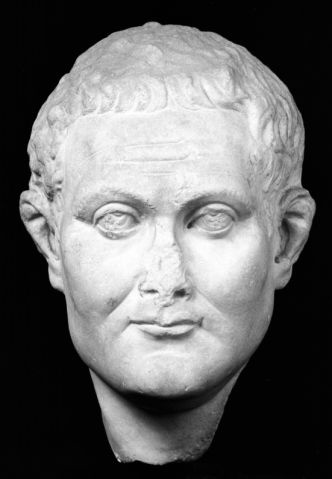
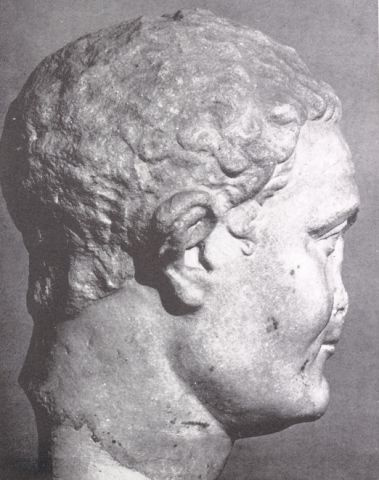
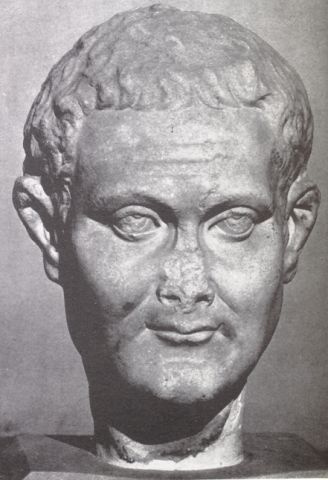
Portrait head of clean-shaven man (re-cut). From Ephesus. Early fourth century.
Record details
Photographs
Bibliography
- Inan, J. and E. Rosenbaum, Roman and Early Byzantine Portrait Sculpture in Asia Minor, Oxford 1966, 147-48, no. 188, pl. 108.3-4
Discussion
DESCRIPTION (Object)
Life-size head. H: 32,5. W: 24,5, H (chin to crown): 27. Medium-grained white marble.
Head broken off through neck. Left part of neck missing. Nose broken off. On top and back, hair has been summarily worked. Tear ducts marked with drill-holes. Pupils are very small crescents; irises are incised in shape of large semi-circles.
PROVENANCE
Ephesus.
DESCRIPTION (Subject)
The roughly worked hair is brushed towards the forehead and down in front of the ears. The tips of the locks form a straight fring high on the forehead. The locks fork a little to the (proper) left of centre. Curling locks hang down in front of the ears.
The tall forehead is marked by three horizontal lines. The eyebrows are carved and form shallow arches. The eyes have heavy lids with sharply cut edges. The naso-labial lines are sharply carved. The corners of the thin-lipped mouth are pulled back in an expression like that of a slight smile. The large and swollen-looking ears protrude somewhat.
Traces of the recutting from an earlier portrait head can be seen in the heavy ears, in the volume of the hair at the back, in the reduction of the face, especially its upper part.
DATE
Inan and Rosenbaum compare the portrait with heads of Constantinian date. Indeed the eyemarkings, the near-smile, and the expressive, somewhat manipulated features belong best in the early fourth century, when many private portraits are again shown clean-shaven instead of stubbled, in imitation of Constantine's new style of public image, attested on coins from c. 310.
Cite: Last Statues of Antiquity, LSA-683 (J. Auinger).