
LSA-694
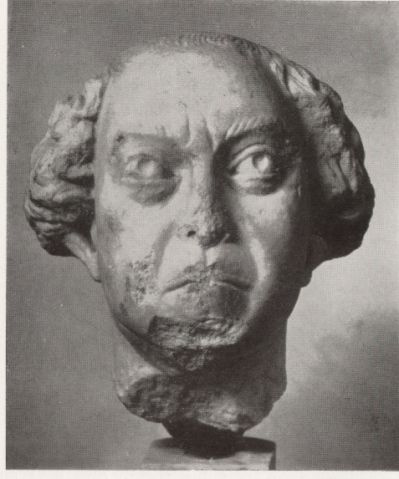
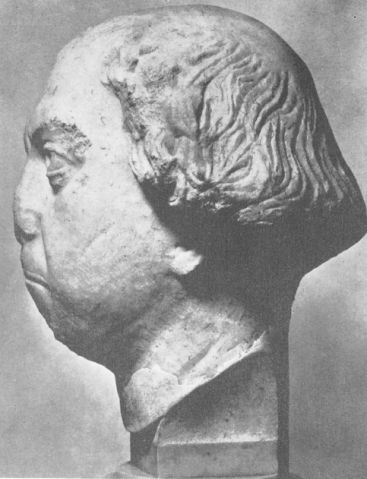
Portrait head of balding pate, wreath hairstyle, and inset pupils. From Ephesus. Fifth century
Record details
Photographs
Bibliography
- Inan, J. and E. Rosenbaum, Roman and Early Byzantine Portrait Sculpture in Asia Minor, Oxford 1966, 154-155, no. 198, pl. 185.1-2
- Rodenwaldt, G., Griechische Porträts aus dem Ausgang der Antike, 76. Programm zum Winckelmannsfeste der Archaeologischen Gesellschaft zu Berlin, Berlin 1919, 21, 27, no. 15, fig. 12
Discussion
DESCRIPTION (Object)
Life-size head. H: 28, H (chin to crown): 22, W: 23,5 cm. Coarse-grained white marble.
Broken at neck in irregular line. Piece of throat and greater part of chin knocked off. Tip of nose chipped off. Smaler damages on the right cheek.
Individual locks are rendered by long strokes of the chisel and a few drill-channels at the sides. Pupils have been drilled in as very large circles, the irises have not been indicated. Drill-holes at the inner corners of the eyes. Hair of eyebrows chiselled.
Dowel-hole, which appears to be original, at the underside of the hair roll at the back.
PROVENANCE
Celsus library or theater, maybe found in 1902.
DESCRIPTION (Subject)
Head of an elderly man, completely bald on the top. Thin fringe of hair above the high forehead, but at the sides and back hair falling in locks. Forehead with two vertical wrinkels between the eyebrows. Eyes with heavy lower und upper lids. Deep groove from the nostrils to the corners of the mouth.
Parting of the lips is indicated by a thin line, and a line, scratched into the surface running parallel to the parting, defines the outline of the upper lip.
Head was fastende to a torso by means of a dowel.
DATE
Rodenwaldt first stylistically dated the head at the end of the fourth century (BWPr), later in 1931 he decided a date in Justinianic period ( AA, 1931, 337). All other scholars (Wegner, Oberleitner, Inan and Rosenbaum) followed Rodenwaldt's second opinion. All dated on external grounds, i.e. mosaics in Ravenna or the diptych of Philoxenus of 525.
Discussion references
- Oberleitner, W. 'Fragment eines spätantiken Porträtkopfes aus Ephesos', Jahreshefte des Österreichischen Archäologischen Instituts in Wien 44, Vienna 1959, 86ff.#, fig. 59
- Stutzinger, D. (ed.), Spätantike und frühes Christentum. Ausstellung im Liebieghaus, Museum alter Plastik, Frankfurt am Main. 16. Dezember bis 11. März 1984, Frankfurt a.M. (1983), 471-2, no. 75
Cite: Last Statues of Antiquity, LSA-694 (J. Auinger).