
LSA-729
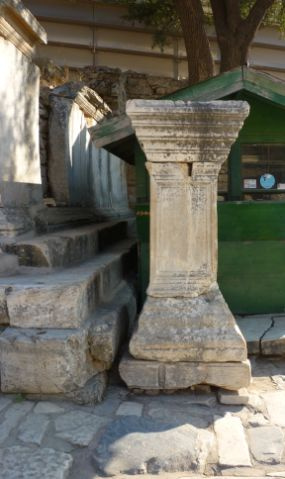
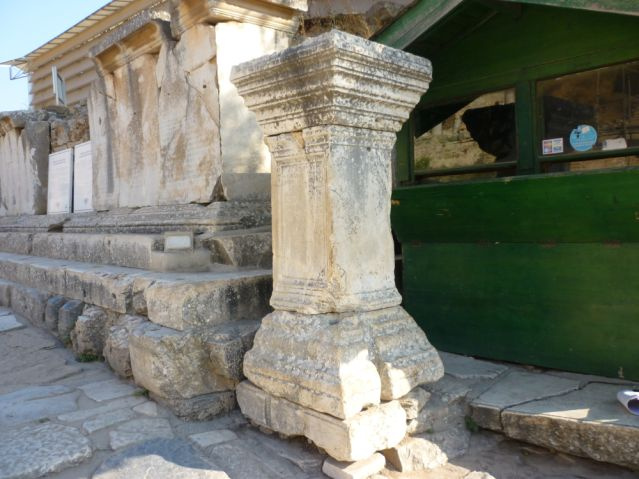
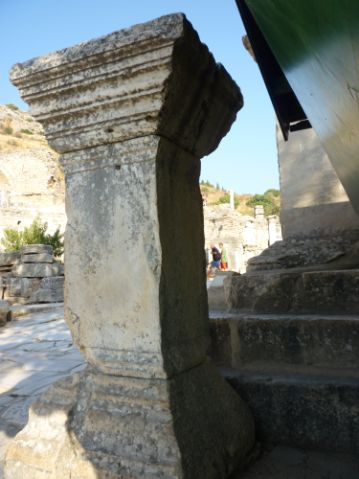
Base for statue of Isidorus, former governor of Asia. Ephesus (Asia). 410-436
Record details
Photographs
Inscription
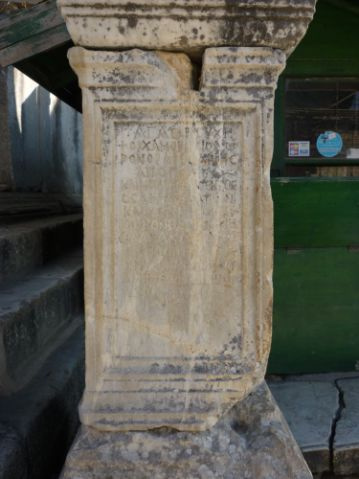
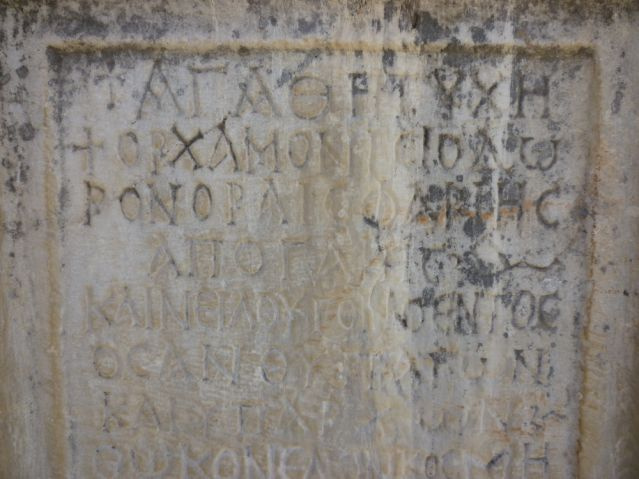
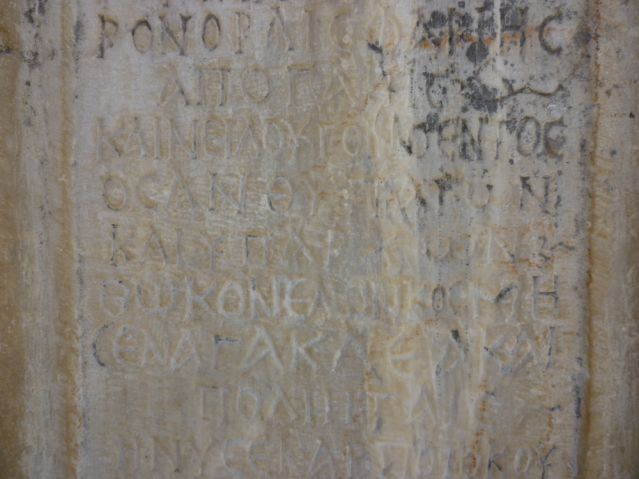
ἀγαθῇ τύχῃ· / ὄρχαμον Ἰσιόδω/ρον ὁρᾶις / Φαρίης /(5) ἀπὸ γαίης / καὶ Νείλου γονόεντος, / ὃς ἀνθυπάτων / καὶ ὑπάρχων / θῶκον ἑλὼν κόσμη/σεν ἀγακλέα καὶ /(11) πολιήταις / ἤνυσε καρποτόκου / Δημήτερος ὄμπνιον / ὄλβον.
Inscription translation
To Good Fortune. The leader Isidorus, you are looking at. He, born from the land of Pharoahs and of the Nile, who, holding the office of proconsuls and prefects, managed famous events and for the citizens brought about the bountiful wealth of fruit-bearing Demeter.
Bibliography
- Engelmann, H. Knibbe, D. & R. Merkelbach, Die Inschriften von Ephesos Teil IV. Inschriften griechischer Städte aus Kleinasien, vol. 14, Bonn 1980, 165, no.1305
Discussion
INSCRIPTION
Verse inscription of two elegiac distichs laid out in 13 lines, with opening invocation, in all 14 lines:
☩ ἀγαθῇ τύχῃ· /
☩ ὄρχαμον Ἰσιόδω/ρον ὁρᾶις / Φαρίης /(5) ἀπὸ γαίης /
καὶ Νείλου γονόεντος, / ὃς ἀνθυπάτων / καὶ ὑπάρχων /
θῶκον ἑλὼν κόσμη/σεν ἀγακλέα καὶ /(11) πολιήταις /
ἤνυσε καρποτόκου / Δημήτερος ὄμπνιον / ὄλβον.
'(cross) To Good Fortune. (cross) The leader Isidorus, you are looking at. He, born from the land of Pharoahs and of the Nile, who, holding the office of proconsuls and prefects, managed famous events and for the citizens brought about the bountiful wealth of fruit-bearing Demeter.' (Trans J. Lenaghan)
Letter height 2.5 - 2.8 cm.
The poetic pairing of Isidorus' homeland, Egypt (famous for its fertility), and the plenty that he brought to Ephesus, is of course deliberate.
DESCRIPTION
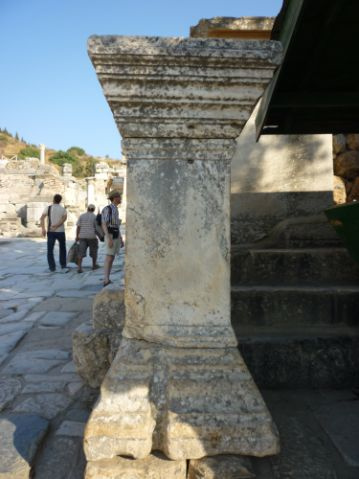
Base of white marble, with mouldings on all sides: (total monument) H 195, W 89, D 86 cm; (shaft) H 103, W 52, D 52 cm.
Composite base for bronze statue. The ensemble stands on a reused marble block with frontal square cut fields. Base moulding with tall and simple profile, lower side not even but adjusted to the oblique position of the marble block at the bottom. On left side long vertical cutting (for insertion of plaque?).
Shaft with moulded panels, only roughly chiseled on the back side. Inscription centred within a deep moulding, with traces of the removal of an earlier inscription. On front side vertical channel on top of shaft, possibly cut for fixing to the crown moulding.
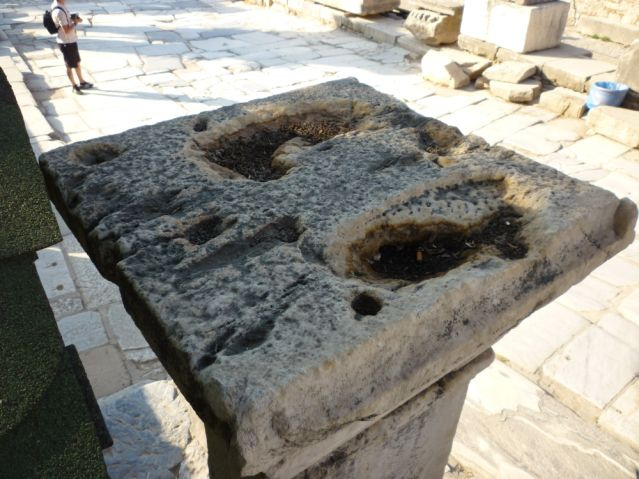
Crown moulding with sequence of four tori/trochili, square on top with beak-like acroteria in relief. Top surface roughly chiseled, with various cuttings, among them two footprints for a bronze statue. At rear, round cuttings.
PROVENANCE AND CURRENT LOCATION
The base was found at the Octagon, in front of its north-west corner, clearly where it had fallen. Today set up close to its findspot.
HONORAND, AWARDER AND DATE
Isidorus, the honorand, a native of Egypt (as mentioned in our inscription), was governor (proconsul) of Asia at a date between 405 and 410, prefect of the city of Constantinople 410-12, praetorian prefect of Illyricum in 424, praetorian prefect of the East 435-6, and consul in 436 (PLRE II, 631-3 Fl. Anthemius Isidorus 9). In our inscription he is addressed as holding, or having held, the offices of proconsul and prefect (ἀνθυπάτων καὶ ὑπάρχων θῶκον ἑλὼν, 'holding the office of proconsuls and prefects', lines 7-9), whereas his consulship is not mentioned. This provides a terminus post quem of 410, and a terminus ante quem of 436.
The reference to the 'bountiful wealth of fruit-bearing Demeter', which he brought to the citizens (πολιήταις ἤνυσε καρποτόκου Δημήτερος ὄμπνιον ὄλβον, lines 11-14), probably refers to the provision of food during a shortage at Ephesus. An event of the kind is mentioned in a letter of Isidorus of Pelusium (Patrologia Graeca, vol. 78; Foss 1979, 27), who died in about 435 (Foss 1979, 35), which lends support to our terminus ante quem of 435.
The awarder is not mentioned in our inscription; it is very likely, however, to have been the city of Ephesus, in gratitude for Isidorus' help in an emergency.
Discussion references
- Foss, C., Ephesus after Antiquity, Cambridge 1979
- Malcus, B. 'Die Prokonsuln von Asien von Diokletian bis Theodosius II', Opuscula Atheniensa, 7 (1967) 91-154, 127
- Martindale, J. R., The Prosopography of the Later Roman Empire. Vol. II A.D. 395-527, Cambridge 1980
Cite: Last Statues of Antiquity, LSA-729 (A. Sokolicek).