
LSA-741
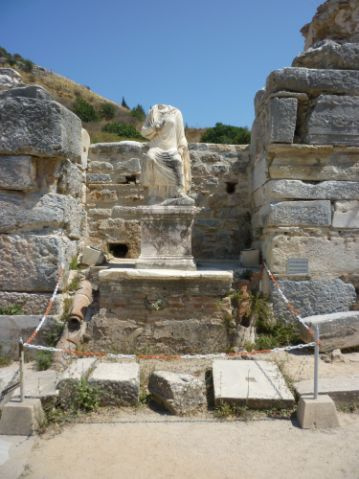
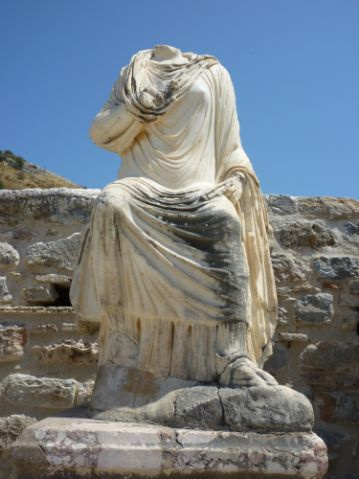
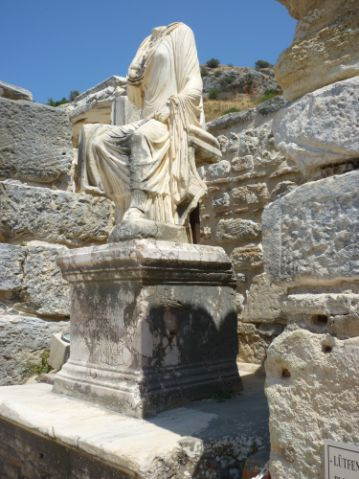
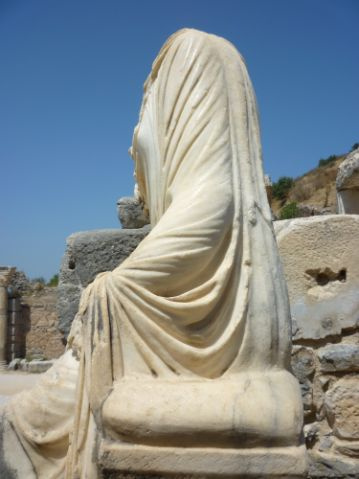
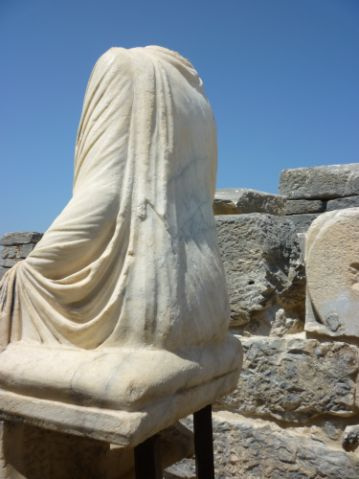
Seated statue of Scholasticia (set on base LSA-742). Ephesus. Fourth century.
Record details
Photographs
Bibliography
- Miltner, F. '21. Vorläufiger Bericht über die Ausgrabungen in Ephesos', Jahreshefte des Österreichischen Archäologischen Institutes in Wien, 43, Vienna 1956-58
- Wankel, H. et al., Die Inschriften von Ephesos II. Inschriften griechischer Städte aus Kleinasien vol. 12, Bonn 1979, 169, no. 453
Discussion
DESCRIPTION (Object)
Life-size seated statue. H: 1,58 m. Coarse-grained white marble with grey veins.
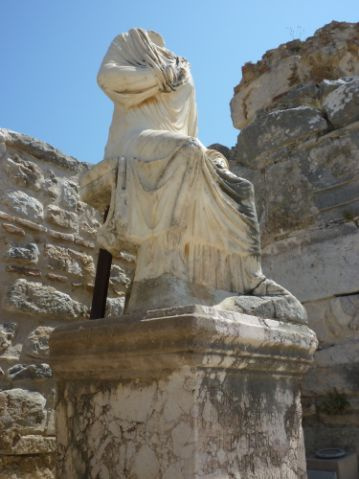
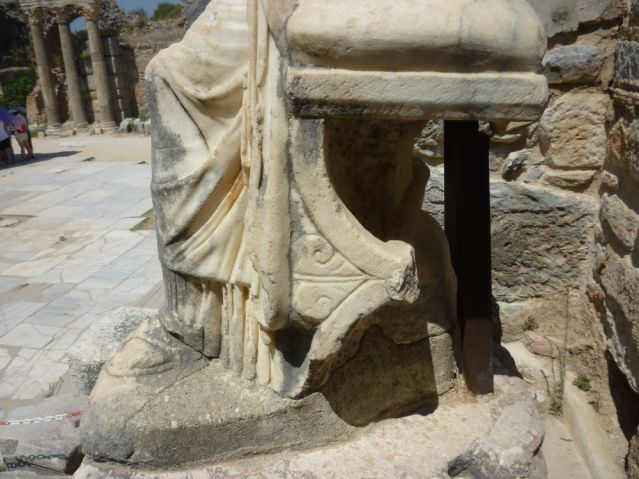
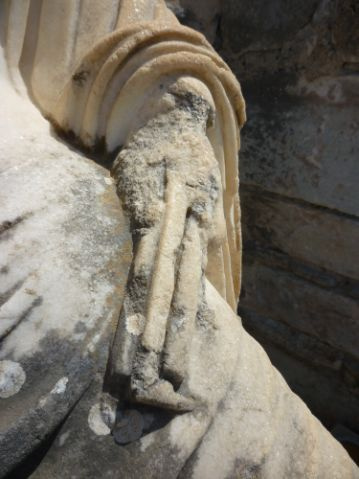
Head, right foot and main part of the plinth are broken off . Around the left foot two fragments of the plinth are preserved. From the chair the feet of the back in total and from the feet on the front the lower parts are broken off. Lower part of the statue corrode. Right hand is broken off, only the traces of the fingers on the himation are visible. Left hand badly damaged. Right knee and elbow, and some folds are damaged too.
Front polished. Here and there using of drill for the folds. Back just smoothed with the rasp. Underneath her chair backside is hollowed and rough chiseled. Modern vertical iron support underneath the seat.
PROVENANCE
Bath of Scholasticia, apsidal hall V, east-side, south end. Found in 1955, together with the base mentioned Scholasticia spending money for the renovation of the bath <I>742">LSA-742.
DESCRIPTION (Subject)
Statue of a seated woman, having the right arm in a tight arm sling, left arm is resting on her left upper leg. Left arm maybe once holding a scroll or two sticks, not clear. She is sitting on a folding chair with floral ornaments between the legs. She wears sandals.
The type of the statue would fit for a grave statue (see Strocka).
DATE
Re-ensemble of a high imperial statue with a fourth century base.
When Miltner found the statue he decided to date the inscription and the statue at the end of the fourth century. Strocka dates stylistically the statue shortly after the mid of the second century A.D., for Koch the date of the statue is later in early severan time.
Discussion references
- Foss, C., Ephesus after Antiquity, Cambridge 1979, 70 fig. 22
- Koch, L., Weibliche Sitzstatuen der Klassik und des Hellenismus und ihre kaiserzeitliche Rezeption : die bekleideten Figuren , Münster 1994, 154 ff.
- Strocka, V.M. 'Zuviel Ehre für Scholastikia', Lebendige Altertumswissenschaft. Festgabe zur Vollendung des 70. Lebensjahres von Hermann Vetters , Vienna 1985, 229-232, pl. 27, figs. 1-3
Cite: Last Statues of Antiquity, LSA-741 (J. Auinger).