
LSA-745
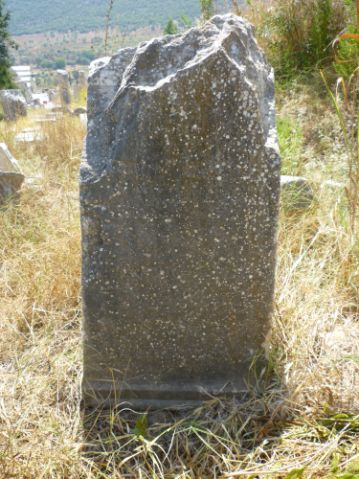
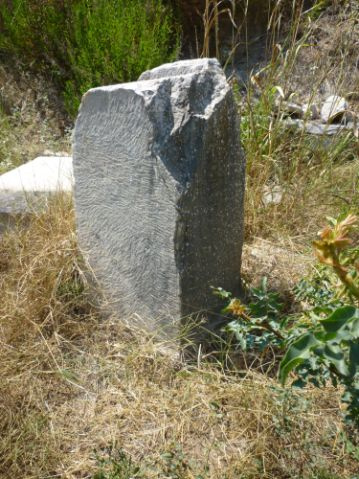
Base for statue of Aelia Flacilla,empress (wife of Theodosius I). Ephesus (Asia). 379-386
Record details
Photographs
Inscription
[ἀγαθῇ τύχῃ·] / [Αἰλ(ίαν) Φλάκι]λλ[αν], / εὐσεβ[εστάτην Αὐγο[ῦσταν], / [ἡ βο]υλὴ κ(αὶ) ὁ δῆμος /(5) [τῆς μ]εγάλης Ἐφέσου, / [τὴν] δέσποιναν τῆς οἰκουμένης, / ἀνθυπατεύοντος / Σεπτιμ(ίου) Μαιαδίου τοῦ λαμ(προτάτου), / πρεσβεύοντος /(10) Σεπτ(ιμίου) Μαιαδίου νε(ωτέρου) τοῦ λαμ(προτάτου)· / εὐτυχῶς.
Inscription translation
'The assembly and the people of great Ephesus [honour] Aelia Flacilla, most pious Augusta, mistress of the civilized world, in the proconsulship of Septimius Maeadius, of clarissimus rank, with Septimius Maedaius the younger, legate of clarissimus rank. With good fortune.
Bibliography
- Wankel, H. et al., Die Inschriften von Ephesos II. Inschriften griechischer Städte aus Kleinasien vol. 12, Bonn 1979, 115-116, no. 315
Discussion
INSCRIPTION
In eleven lines:
[ἀγαθῇ vacat τύχῃ·] / [Αἰλ(ίαν) Φλάκι]λλ[αν], / [εὐσεβ[εστάτην Αὐγο[ῦσταν], / [ἡ βο]υλὴ κ(αὶ) ὁ δῆμος /(5) [τῆς μ]εγάλης Ἐφέσου, / [τὴν] δέσποιναν τῆς οἰκουμένης, / ἀνθυπατεύοντος / Σεπτιμ(ίου) Μαιαδίου τοῦ λαμ(προτάτου), / πρεσβεύοντος /(10) Σεπτ(ιμίου) Μαιαδίου νε(ωτέρου) τοῦ λαμ(προτάτου)· / εὐτυχῶς.
'The assembly and the people of great Ephesus [honour] Aelia Flacilla, most pious Augusta, mistress of the civilized world, in the proconsulship of Septimius Maeadius, of clarissimus rank, with Septimius Maedaius the younger, legate of clarissimus rank. With good fortune.' (Translation J. Lenaghan)
Letter height 2 - 2.2 cm.
DESCRIPTION
White marble base: H 110, W 49, D 45 cm.
PROVENANCE AND CURRENT LOCATION
The base was found in the Theatre Street, when R. Heberdey in 1901 excavated the debris of a hall west of the street and north of the Theatre (sketchbook no. 777, R. Heberdey in 1901). The base was set up close to its find spot on the west side of the street.
HONORAND AND DATE
The honorand, Aelia Flacilla, was the wife of Theodosius I and mother of Arcadius and Honorius. She was proclaimed Augusta (as she is entitled on our base) in 379, and died in 386.
The awarder was the council (boule) and people (demos) of Ephesus.
FURTHER DISCUSSION
The same council and people of Ephesus honoured Flacilla with another statue, in the Curetes Street, set amongst a group of Nikes (LSA-723); she was also honoured in Aphrodisias (LSA-185).
Discussion references
- Malcus, B. 'Die Prokonsuln von Asien von Diokletian bis Theodosius II', Opuscula Atheniensa, 7 (1967) 91-154, 116-17, no. 12
Cite: Last Statues of Antiquity, LSA-745 (A. Sokolicek).