
LSA-748
Base for statue of Julian, emperor. Ephesus (Asia). 361-363.
Record details
Photographs
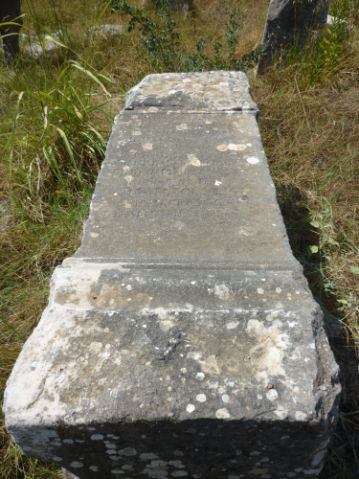
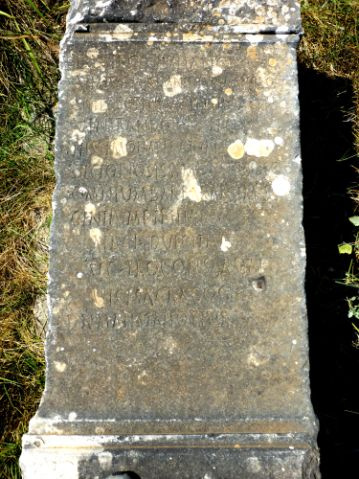
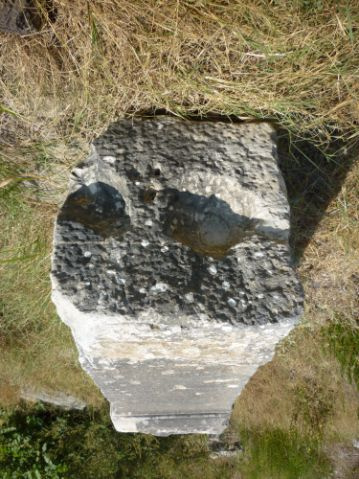
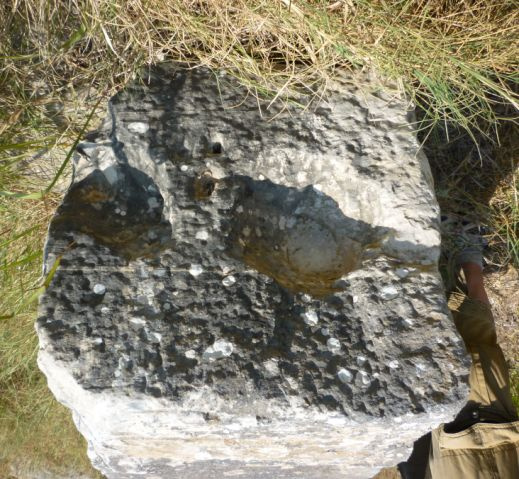
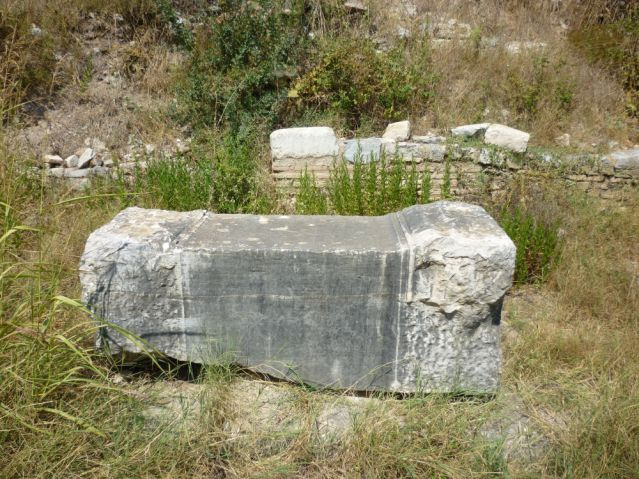
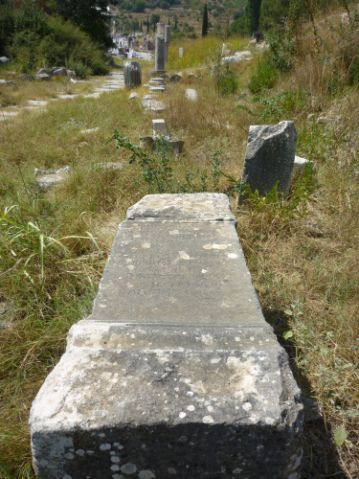
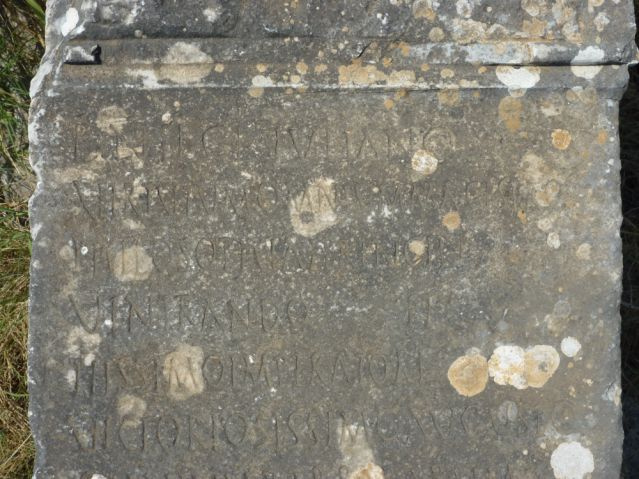
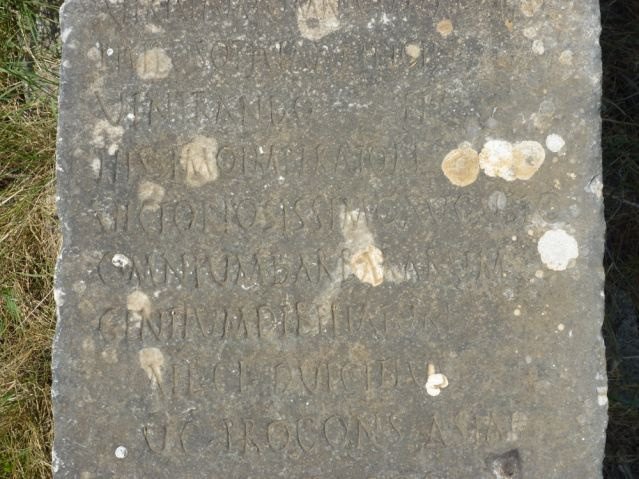
Inscription
D(omino) n(ostro) Fl(avio) Cl(audio) Iuliano, / virtutum omnium magistro, / philosophiae principi / venerando et /(5) piissimo imperatori, / victoriosissimo Augusto, / omnium barbararum / gentium debellatori, / Ael(ius) Cl(audius) Dul[citius], / (10)/ v(ir) c(larissimus), procons(ul) Asiae, / vice sacra cog(noscens), / d(evotus) n(umini) maiestatiq(ue) eius
Inscription translation
To our lord Flavius Claudius Iulianus, teacher of all virtues, venerable master of Philosophy (princeps philosophiae) and most pious emperor, most victorious Augustus, conqueror of all barbarian peoples. Aelius Claudius Dulcitius, of clarissimus rank, governor (proconsul) of Asia, judge representing the emperor, devoted to his divine spirit and majesty, [set this up].
Bibliography
- Wankel, H. et al., Die Inschriften von Ephesos II. Inschriften griechischer Städte aus Kleinasien vol. 12, Bonn 1979, 114, no. 313 A
Discussion
INSCRIPTION
In twelve lines:
D(omino) n(ostro) Fl(avio) Cl(audio) Iuliano, / virtutum omnium magistro, / philosophiae principi / venerando et /(5) piissimo imperatori, / victoriosissimo Augusto, / omnium barbararum / gentium debellatori, / Ael(ius) Cl(audius) Dul[citius], / (10)/ v(ir) c(larissimus), procons(ul) Asiae, / vice sacra cog(noscens), / d(evotus) n(umini) maiestatiq(ue) eius
'To our lord Flavius Claudius Iulianus, teacher of all virtues, venerable master of Philosophy (princeps philosophiae) and most pious emperor, most victorious Augustus, conqueror of all barbarian peoples. Aelius Claudius Dulcitius, of clarissimus rank, governor (proconsul) of Asia, judge representing the emperor, devoted to his divine spirit and majesty, [set this up].'
Letter height: 3 - 3.2 cm
DESCRIPTION
Base of white marble: H 179, W 59, D 65 cm. Tall and simple lower moulding, on three sides; damaged upper moulding, originally with a sequence of tori and trochili. On the front side of the lower moulding a vine leaf, on the shaft, to the left of the inscription, an ivy leaf. On the top face, settings for a bronze statue, almost certainly dating from an earlier use of the base.
PROVENANCE AND CURRENT LOCATION
Found in 1901 by R. Heberdey during excavations of the street between theatre and stadium, north of theatre, in debris of west hall (sketchbook nr. 776). The base is today lying on its side, close to its findspot.
HONORAND, AWARDER AND DATE
Julian, the honorand, was Augustus 360-3, but only recognised in the East after the death of Constantius II in 361.
Aelius Claudius Dulcitius, the awarder, was governor (proconsul) of Asia in the period of Julian's sole rule (361-3) and set up a series of honours to his benefactor (LSA-713 ; see further PLRE I, 274, Aelius Claudius Dulcitius 5; Bringmann 2008). Dulcitius was himself honoured with a statue in Ephesus, set up by the province of Asia (LSA-733 ).
Cite: Last Statues of Antiquity, LSA-748 (A. Sokolicek).