
LSA-756
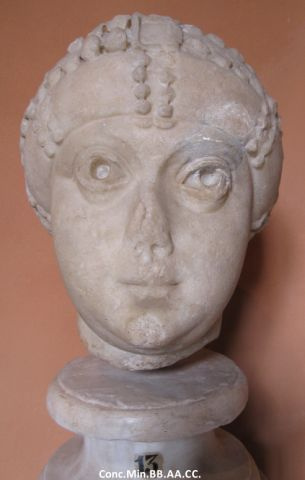
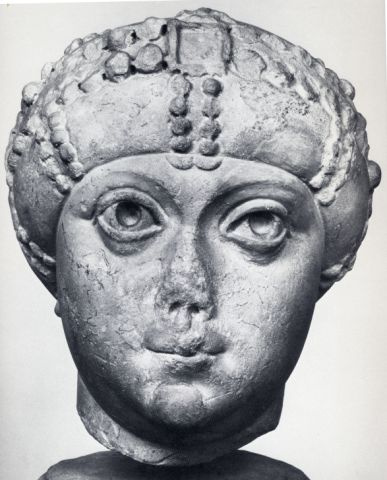
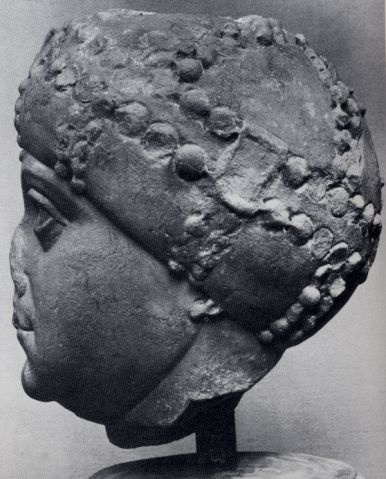
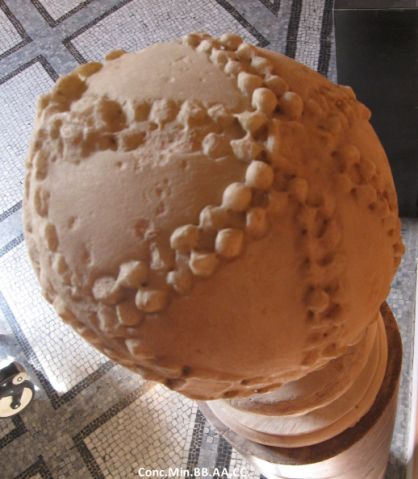
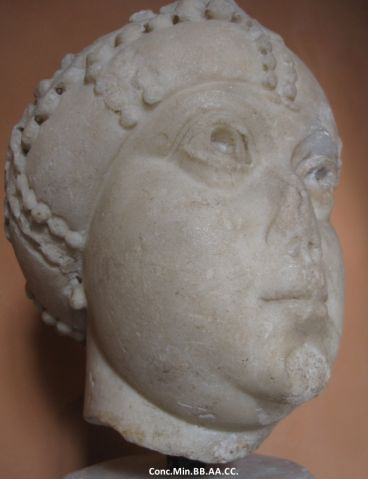
Portrait head of woman related to Lateran-Louvre ('Ariadne-Amalasuntha') type. From Rome. Late fifth to sixth century.
Record details
Photographs
Bibliography
- Fittschen, Klaus and P. Zanker, Katalog der Porträts in den Capitolischen Museen und den anderen kommunalen Sammlungen der Stadt Rom, Band III , Mainz 1983, 36-8, no. 39, pls. 49-50
- Schade, K., Frauen in der Spätantike--Status und Repräsentation, Mainz 2003, 219-20, no. I 60, pls. 63.1 and 64.1-2
Discussion
PROVENANCE/LOCATION
Found in 1887 near S. Maria dei Monti in Rome, the marble head is now in the Palazzo dei Conservatori.
DESCRIPTION
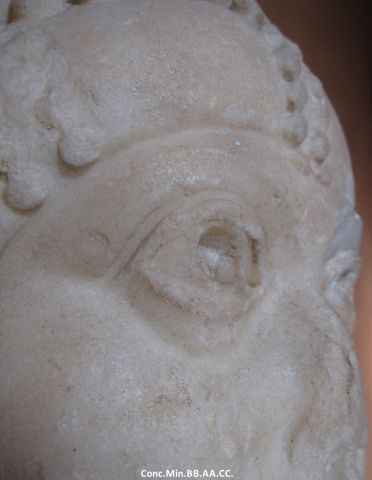
The marble head shows many stylistic and physiognomic similarities to two other portraits which are generally identified as the empress Ariadne, LSA-755 and LSA-757. These works share the same round face with wide eyes with circular hollows that were to receive an inlay. Traces of a white adhesive in the cavity in the right eye of this portrait have been recorded, and the portrait in the Lateran, LSA-755, has irises made of black stone.
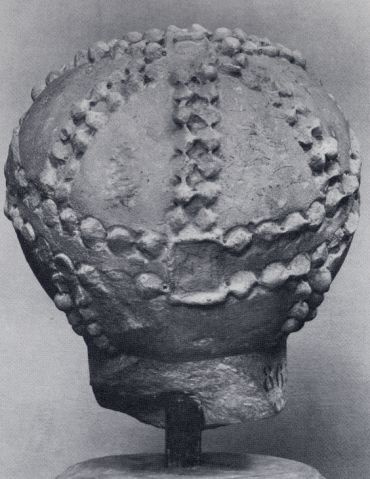
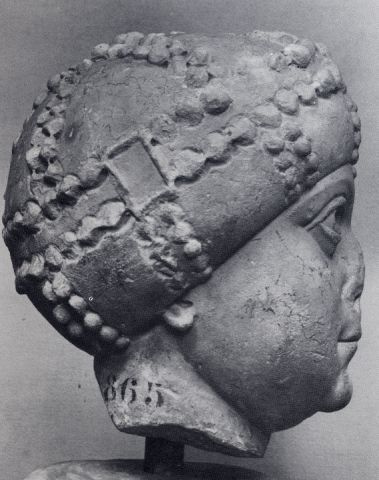
On the basis of these comparisons the attribution of this head to Ariadne and its Constantinopolitan origin seem plausible. This portrait, however, wears only the scarf to which the pearl- and jewel-diadem is fitted, whereas the other two portraits show a scarf of thin material that covers the hair entirely and to which an elaborate crown is attached. This latter type of headdress was introduced after the marriage between Ariadne and Anastasius, suggesting that the portrait in the Palazzo dei Conservatori is slightly earlier than the Lateran and Louvre ones. Such a hypothesis might find confirmation in the fuller face, more youthful face of this portrait. The importance, though, of the individual identification should not be overemphasized given the ambiguities of this kind of imperial representations.
DATE
The head belongs on stylistic grounds to the later fifth or early sixth century. If the identification as a portrait of Ariadne and if the headgear is indicative of a date before her marriage to Anastasius, the head might be precisely dated prior to 491.
Discussion references
- Delbrueck, R., 'Porträts byzantinischer Kaiserinnen', Mitteilungen des Kaiserlich Deutschen Archäologischen Instituts, Römische Mitteilungen 28 , Berlin 1913, 213
- Ensoli, S. and E. La Rocca (eds.), Aurea Roma: dalla città pagana alla città cristiana, Roma 2000, 581-2, no. 269 (A. Acconci: early sixth century)
- MacClanan, A., Representations of Early Byzantine Empresses. Image and Empire, New York 2002, 85-7
- Sande, S., 'Zur Porträtplastik des 6. Jhds n. Chr.,' , Acta ad archaeologiam et artium historiam pertinentia, 6 (1975), 65-166., 67-70
- Stichel, R. H. W., Die römische Kaiserstatue am Ende der Antike, Roma 1982, 59, pls. 26 and 28
- Stutzinger, D. (ed.), Spätantike und frühes Christentum. Ausstellung im Liebieghaus, Museum alter Plastik, Frankfurt am Main. 16. Dezember bis 11. März 1984, Frankfurt a.M. (1983), no. 73
Cite: Last Statues of Antiquity, LSA-756 (Yuri Marano).