
LSA-771
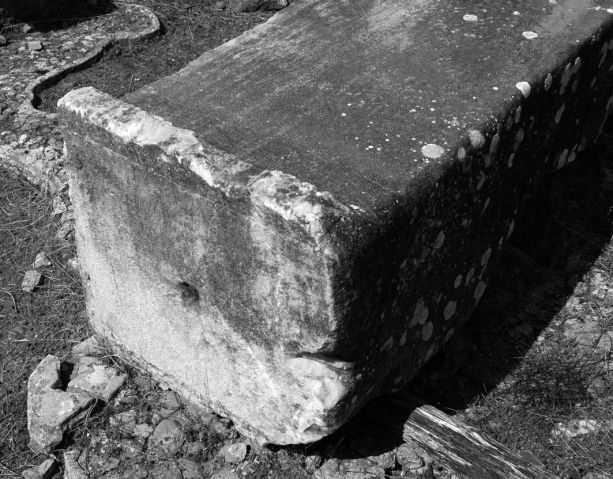
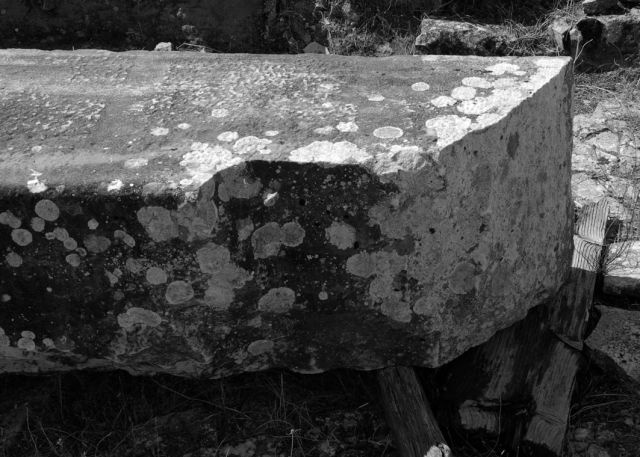
Base for busts (perhaps sculpted) of Gratian, Valentinian II, and Theodosius I, emperors. Gortyna (Creta). 382
Record details
Photographs
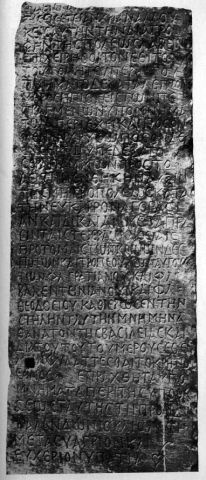
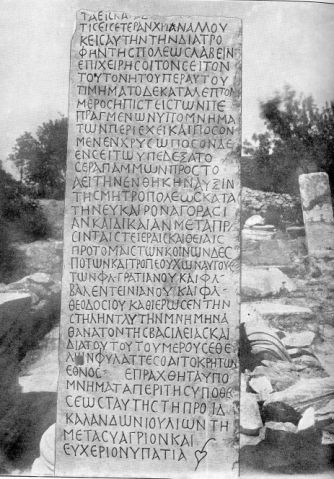
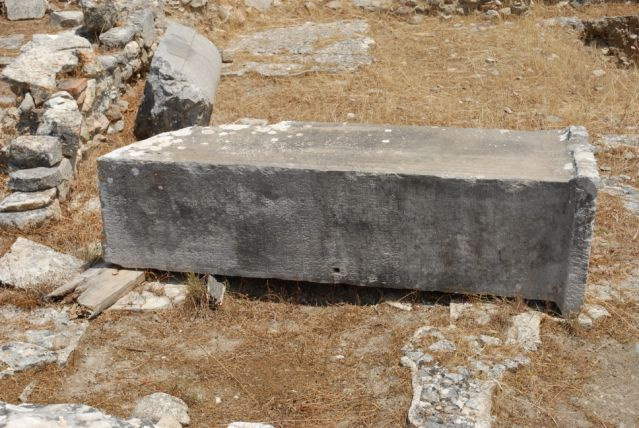
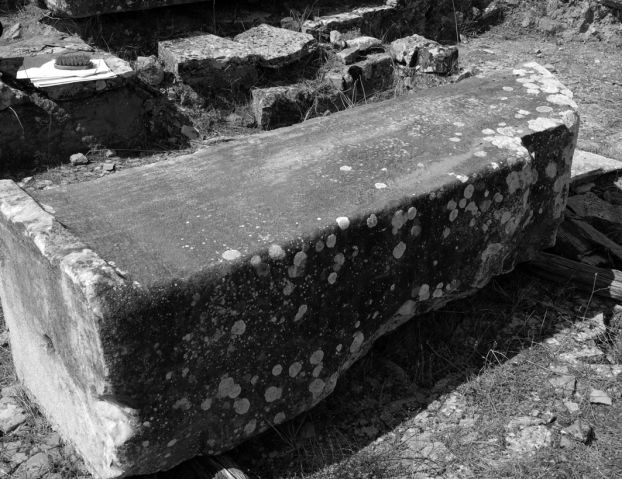
Inscription
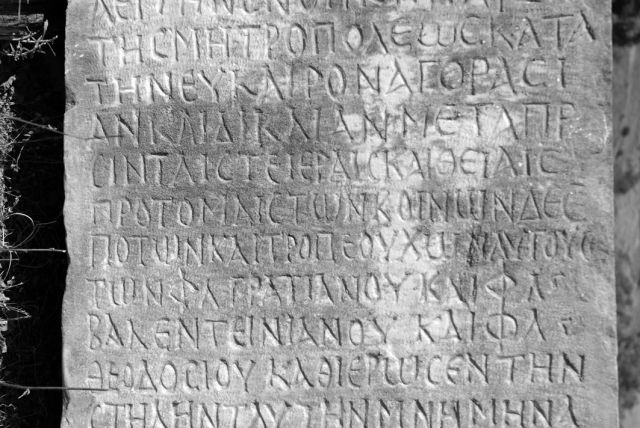
(vacat 1 line) τὰ εἰς κατ̣̣αδίκ̣ην ε̣ἴ̣ π̣οτ̣[έ] / τις εις ἑτέραν χρίαν ἀλλ’ οὐ/κ εἰς αὐτὴν τὴν διατρο/φὴν τῆς πόλεως λαβεῖν /(5) ἐπιχειρήσοι τὸν σεῖτον / τοῦτον ἢ τὸ ὑπὲρ αὐτοῦ / τίμημα, τὸ δὲ κατὰ λεπτὸν / μέρος ἡ πίστεις τῶν πε/πραγμένων ὑπομνημά/των περιέχει καὶ πόσον μὲν ἐν χρυσῷ, πόσον δὲ /(11) ἐν σείτῳ ὑπεδέξατο / Σεραπάμμων πρὸς τὸ / ἀεὶ τὴν ἐνθήκην αὔξιν / (15) τῆς μητροπόλεως κατὰ / τὴν εὔκαιρον ἀγορασί/αν καὶ δικαίαν μετάπρα̣/σιν· ταῖς τε ἱεραῖς καὶ θείαις / προτομαῖς τῶν κοινῶν δεσ/ποτῶν καὶ τροπεούχων Αὐγούσ/των Φλ(αουίου) Γρατιανοῦ καὶ Φλ(αουίου) /(22) Βαλειντεινιανοῦ καὶ Φλ(αουίου) / Θεοδοσίου καθιέρωσεν τὴν / στήλην τ(α)ύτην, μνήμην ἀ/θάνατον τῆς βασιλείας καὶ /(26) διὰ τούτου τοῦ μέρους ἐθέ/λων φυλάττες(θ)αι τὸ Κρητῶν / ἔθνος. (vacat) ἐπράχθη τὰ ὑπο/μνήματα περὶ τῆς ὑποθέ/σεως ταύτης τῇ πρὸ ιδ /(31) καλανδῶν Ἰουλίων τῇ / μετὰ Συάγριον καὶ / Εὐχέριον ὑπατίᾳ.
Inscription translation
'...about the punishment, if ever anybody puts his hand to take this corn for another use than the feeding of the city, or the money which is provided for that. (7) The record of the proceedings contains the details and also how much in corn and how much in gold Serapammon received in order to always increase the store (=stored corn supply) of the city by trading at a proper time and distributing justly. (18) For the sacred and divine busts of the common Lords and triumphant Augusti Flavius Gratianus and Flavius Valentinianus and Flavius Theodosius he erected this stele, as an immortal memorial of their reign, and because he wanted that by this measure the people of the Cretans be protected. (28) The records concerning this issue were registered on the 14th day before the Kalends of July (18 June) during the consulship of Syagrius and Eucherius (AD 381)'
Bibliography
- Guarducci, M., Inscriptiones Creticae. Vol 4. Tituli Gortynii, Roma 1950, no. 285
Discussion
INSCRIPTION
In 33 lines:
(vacat 1 line) τὰ εἰς κατ̣̣αδίκ̣ην ε̣ἴ̣ π̣οτ̣[έ] / τις εις ἑτέραν χρίαν ἀλλ’ οὐ/κ εἰς αὐτὴν τὴν διατρο/φὴν τῆς πόλεως λαβεῖν /(5) ἐπιχειρήσοι τὸν σεῖτον / τοῦτον ἢ τὸ ὑπὲρ αὐτοῦ / τίμημα, τὸ δὲ κατὰ λεπτὸν / μέρος ἡ πίστεις τῶν πε/πραγμένων ὑπομνημά/των περιέχει καὶ πόσον μὲν ἐν χρυσῷ, πόσον δὲ /(11) ἐν σείτῳ ὑπεδέξατο / Σεραπάμμων πρὸς τὸ / ἀεὶ τὴν ἐνθήκην αὔξιν / (15) τῆς μητροπόλεως κατὰ / τὴν εὔκαιρον ἀγορασί/αν καὶ δικαίαν μετάπρα̣/σιν· ταῖς τε ἱεραῖς καὶ θείαις / προτομαῖς τῶν κοινῶν δεσ/ποτῶν καὶ τροπεούχων Αὐγούσ/των Φλ(αουίου) Γρατιανοῦ καὶ Φλ(αουίου) /(22) Βαλειντεινιανοῦ καὶ Φλ(αουίου) / Θεοδοσίου καθιέρωσεν τὴν / στήλην τ(α)ύτην, μνήμην ἀ/θάνατον τῆς βασιλείας καὶ /(26) διὰ τούτου τοῦ μέρους ἐθέ/λων φυλάττες(θ)αι τὸ Κρητῶν / ἔθνος. (vacat) ἐπράχθη τὰ ὑπο/μνήματα περὶ τῆς ὑποθέ/σεως ταύτης τῇ πρὸ ιδ /(31) καλανδῶν Ἰουλίων τῇ / μετὰ Συάγριον καὶ / Εὐχέριον ὑπατίᾳ.
'...about the punishment, if ever anybody puts his hand to take this corn for another use than the feeding of the city, or the money which is provided for that. (7) The record of the proceedings contains the details and also how much in corn and how much in gold Serapammon received in order to always increase the store (=stored corn supply) of the city by trading at a proper time and distributing justly. (18) For the sacred and divine busts of the common Lords and triumphant Augusti Flavius Gratianus and Flavius Valentinianus and Flavius Theodosius he erected this stele, as an immortal memorial of their reign, and because he wanted that by this measure the people of the Cretans be protected. (28) The records concerning this issue were registered on the 14th day before the Kalends of July (18 June) after the consulship of Syagrius and Eucherius (= AD 382)'.
Letter height 2.5-3cm.
The inscription deals with the gold and corn received by a certain Serapammon, doubtless a subordinate of the magistrate who issued the text, for the benefit of the city, and with the punishment incurred when these measures were not adhered to. The name of the issuing magistrate must have been given in the lost top line; he is referred to in line 23 (καθιέρωσεν) (see below, 'Honorands and Date').
DESCRIPTION (from Guarducci 1950 and the published photo)
Tall, slightly conical, stele of white marble. H. 200 cm, W. 50 cm, D. 55 cm. Broken and lost at the top; left and right margins chipped. A rectangular hole which interrupts the beginning of line 28 must be from a later use since it damages the text. The inscription covers the upper part of the stele, 128 of the 200 cm. The inscribed field is not framed.
PROVENANCE/ LOCATION
Found in the ruins of the praetorium in Gortyna, where it is still in situ.
HONORANDS AND DATE
Gratian was Augustus 367-83, his brother Valentinian II 375-92, Theodosius II 379-95. The exact date of the inscription, 18 June 382, is given in line 31-2 (τῇ πρὸ ιδ / καλανδῶν Ἰουλίων τῇ / μετὰ Συάγριον καὶ / Εὐχέριον ὑπατίᾳ, 'on the 14th day before the Kalends of July (=18 June) after the consulship of Syagrius and Eucherius'). The consuls are of the year 381 (Bagnall et al. 1987, 296-7; PLRE I, 862-3 Flavius Syagrius 3; PLRE I, 288 Flavius Eucherius 1), hence the year after their consulship was 382. Dating after the previous consulship was used when the names of the new consuls were not yet known - it is explicitly and unambiguously used here, although it is very strange that in the provincial capital of Crete the names of the new consuls were apparently unknown in mid-June.
The name of the issuing magistrate must have been given in the lost first line of the inscription; Guarducci 1950, 326 assumed that it was the governor (consularis) Asclepiodotus (PLRE I, 115 Oecumenius Dositheus Asclepiodotus 2; cf. LSA-472, LSA-770, LSA-774, LSA-775, LSA-776, LSA-777, LSA-778, LSA-779, LSA-780, LSA-781, LSA-792). This is highly probable since Asclepiodotus' governorship is dated to the years 382-3 by the bases he set up for Valerius Severus (LSA-776) and Flavius Hypatius (LSA-778), and since he clearly enjoyed seeing his own name on inscriptions.
FURTHER DISCUSSION
The text says explicitly that the stele was crowned by the 'sacred and divine busts' - ἱεραί καὶ θεῖαι προτομαί - of the three emperors, whose presence was obviously seen as confirming and protecting the inscribed memorial which they crowned. These could have been on a painted panel; but, in this context, could have been sculptures in the round. On the other hand, the top of the base is only 50 cm wide, so sculpted busts could only have been very small (perhaps in bronze?).
Discussion references
- Bagnall, R. S. & Cameron, A. & Schwartz, S. R. & Worp, K. A., Consuls of the Later Roman Empire, Atlanta, Georgia 1987, 296-7
- Jones, A. H. M. et al., The Prosopography of the Later Roman Empire. Vol. I 260-395, Cambridge et al. 1971 (1975)
Cite: Last Statues of Antiquity, LSA-771 (Francesca Bigi - Ignazio Tantillo - Ulrich Gehn).