
LSA-774
Semicolumnar block, probably base for statue, with dedication to Oecumenius Dositheus Asclepiodotus, governor of Creta. Gortyna (Creta). 382-383
Record details
Photographs
Inscription
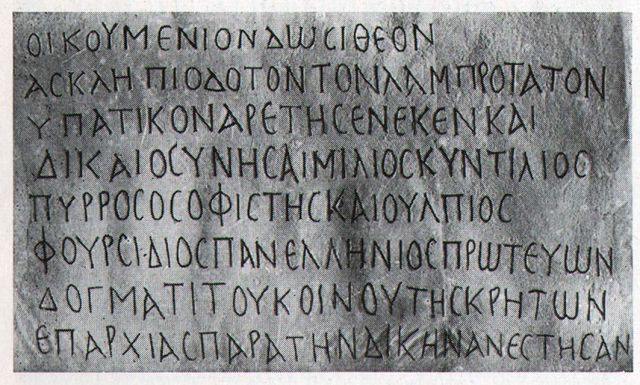
Οἰκουμένιον Δωσίθεον / Ἀσκληπιόδοτον, τὸν λαμπρότατον / ὑπατικόν, ἀρετῆς ἕνεκεν καὶ / δικαιοσύνης Αἰμίλιος Κυντίλιος / Πύρρος ὁ σοφιστὴς καὶ Οὔλπιος / Φουρσίδιος Πανελλήνιος πρωτεύων, / δόγματι τοῦ κοινοῦ τῆς Κρητῶν / ἐπαρχίας, παρὰ τὴν Δίκην ἀνέστησαν
Inscription translation
Aemilius Quintilius Pyrrhus the sophist and Ulpius Fursidius Panhellenius, who stood first, set (this) up to Oecumenius Dositheus Asclepiodotus the governor (consularis) of clarissimus rank, by Dike (= the praetorium), because of his virtue and his justice, by decree of the assembly of the province of the Cretans
Bibliography
- Guarducci, M., Inscriptiones Creticae. Vol 4. Tituli Gortynii, Roma 1950, no. 313
Discussion
INSCRIPTION
In eight lines:
Οἰκουμένιον Δωσίθεον / Ἀσκληπιόδοτον, τὸν λαμπρότατον / ὑπατικόν, ἀρετῆς ἕνεκεν καὶ / δικαιοσύνης Αἰμίλιος Κυντίλιος /(5) Πύρρος ὁ σοφιστὴς καὶ Οὔλπιος / Φουρσίδιος Πανελλήνιος πρωτεύων, / δόγματι τοῦ κοινοῦ τῆς Κρητῶν / ἐπαρχίας, παρὰ τὴν Δίκην ἀνέστησαν
'Aemilius Quintilius Pyrrhus the sophist and Ulpius Fursidius Panhellenius, who stood first, set (this) up to Oecumenius Dositheus Asclepiodotus the governor (consularis) of clarissimus rank, by Dike (= the praetorium), because of his virtue and his justice, by decree of the assembly of the province of the Cretans'
DESCRIPTION (from Guarducci 1950 and De Tommaso 2000, 343)
Tall semi-columnar block of grey local marble. Height 150 cm, width 59 cm, depth 53 cm. The inscription is on the convex side. There is no published photo.
PROVENANCE AND CURRENT LOCATION
The inscription was found in the ruins of the praetorium (Guarducci). It is preserved there on its eastern side (De Tommaso 2000, 343).
HONORAND, AWARDERS AND DATE
The base belongs to a set of semicolumnar blocks of identical size and material. Three of these, with identical texts, are dedicated to the emperors Gratian, Valentinian II and Theodosius I, thereby datable between the accession of Theodosius in 379 and Gratian's death in 383 (LSA-472, LSA-770, LSA-950). However, the governorship of the awarder of all three dedications to the emperors and the honorand of our base, Oecumenius Dositheus Asclepiodotus, is reliably datable to 382-3 (PLRE I, 115 Oecumenius Dositheus Asclepiodotus 2). Our base forms a group with the three imperial dedications (see below, Further Discussion).
Asclepiodotus is commemorated in no less than eleven inscriptions in Crete. Besides our inscription and the bases dedicated by him to the three emperors (on two of which his name is preserved, LSA-472, LSA-770), he was honoured with a statue in Olus (LSA-792); in Gortyna a set of 10 statue bases for leading members of the urban Roman aristocracy is testified to LSA-773, LSA-775, LSA-776, LSA-777, LSA-778, LSA-779, LSA-780, LSA-781, LSA-782, LSA-783), on seven of which Asclepiodotus' name as awarder appears (LSA-775, LSA-776, LSA-777, LSA-778, LSA-779, LSA-780, LSA-781).
Oecumenius' base is awarded by Aemilius Quintilius Pyrrhus, styled 'sophistes', and Ulpius Fursidius Panhellenius, styled πρωτεύων, literally 'standing first' (almost certainly referring to his role in this body), on behalf of the provincial assembly of Crete. Both men must be local aristocrats. Aemilius Quintilius Pyrrhus probably held the governorship of Creta himself, after Asclepiodotus, and was himself honoured with a statue base by the city of Gortyna (LSA-786; PLRE I, 756 Aemilius Quintilius Pyrrhus 3). He appears as awarder on a further statue dedication, to Marcellinus, in Gortyna (LSA-785). Ulpius Fursidius Panhellenius is otherwise unknown (he is unlikely to be the same man as the governor of Lydia of 382, PLRE I, 665 Panhellenius).
FURTHER DISCUSSION
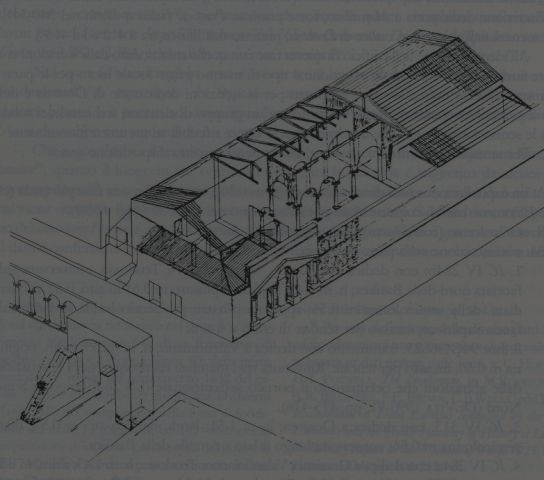
The remains of four semi-columnar blocks of identical size and material, with their dedicatory inscriptions on the convex face, are preserved in Gortyna (LSA-472, LSA-770, our inscription LSA-774, and LSA-950). Three of these carry dedications to the emperors Gratian, Valentinian II, and Theodosius I by the governor Oecumenius Dositheus Asclepiodotus (LSA-472, LSA-770, LSA-950), the fourth, our inscription LSA-774, a dedication to the governor himself by local men. From the inscriptions LSA-472 and LSA-770 it is evident that the bases were set up at the entrance of the new praetorium, which our governor Asclepiodotus had built 'from its foundations'. Our inscription, to the governor himself, has a comparable phrase, stating that it was set up 'by Dike' (goddess of Justice) - παρὰ τὴν Δίκην - alluding to the place where justice was administered, hence the praetorium. Archaeological evidence suggests that Asclepiodotus' work was in fact a major repair, perhaps after damage in the earthquake of 365 (De Tommaso 2000, 342).
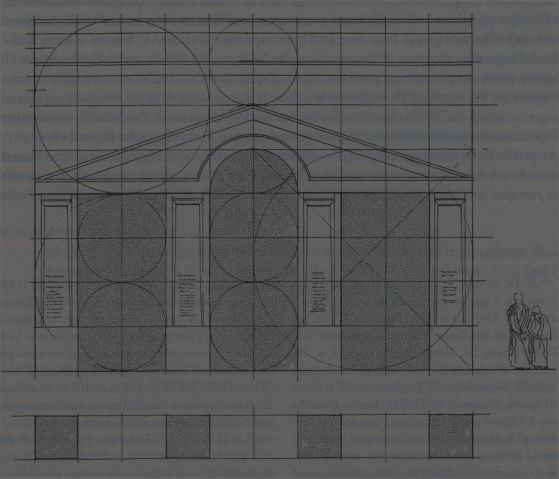
It has been assumed that four semicolumns with inscriptions blended a new monumental entrance to the praetorium (De Tommaso 2000, 345), and that they did not carry statues (De Tommaso 2000, 346 n. 65, and his reconstruction figs. 51, 52). However recent research has revealed that the semicolumnar bases were cut out of larger architectural elements (F. Bigi & I. Tantillo, forthc.). When inscribed, they did not serve their architectural purpose anymore. Moreover, the epigraphic formula using the accusative for the honorand and naming the awarder, is typical of a statue dedication. We do believe that three of the semi-columnar bases (LSA-472, LSA-770, and LSA-950) once carried the statue of one of the emperors mentioned in the dedicatory texts, while the fourth, our base LSA-774, carried a statue of Asclepiodotus himself. As statue bases, they were probably set up along with the dedications to leading members of the Roman senatorial aristocracy (see above, 'Honorands, Awarder and Date'), and did not form part of the architectural setting of the praetorium.
Discussion references
- De Tommaso, G., Il Settore B: La Basilica del Pretorio. Fase B6 = Fase costruttiva IX (ultimo venticinquennio del IV sec. d.C.), Gortina V.1. Lo Scavo del Pretorio (1989-1995) - Vol. V. 1* - , 337-48, Padova 2000
- Jones, A. H. M. et al., The Prosopography of the Later Roman Empire. Vol. I 260-395, Cambridge et al. 1971 (1975)
Cite: Last Statues of Antiquity, LSA-774 (Francesca Bigi - Ignazio Tantillo - Ulrich Gehn).