
LSA-783
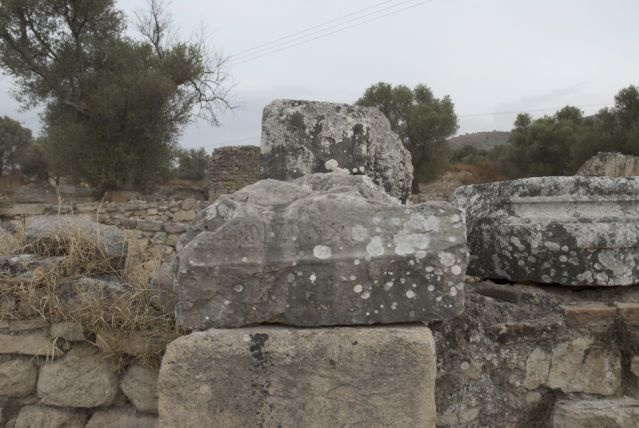
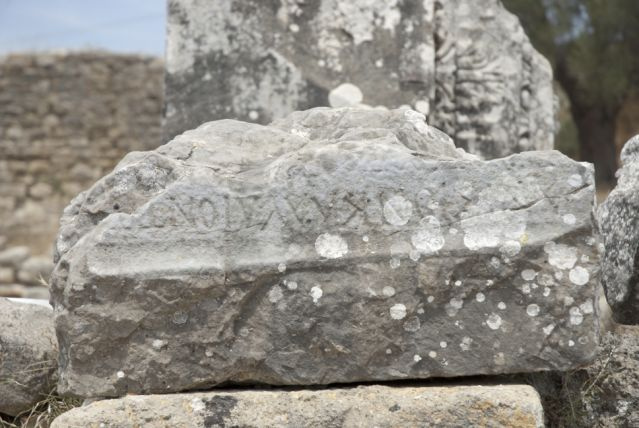
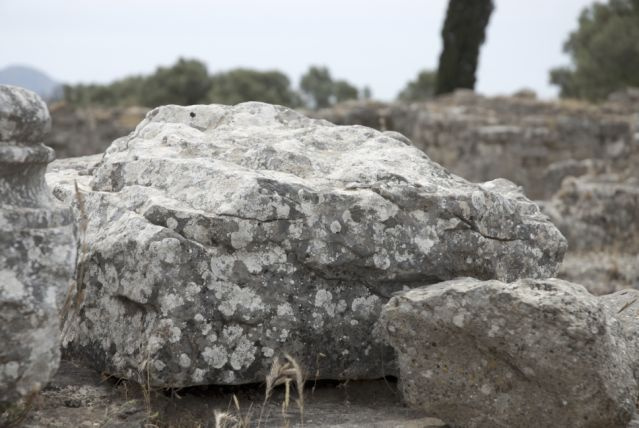
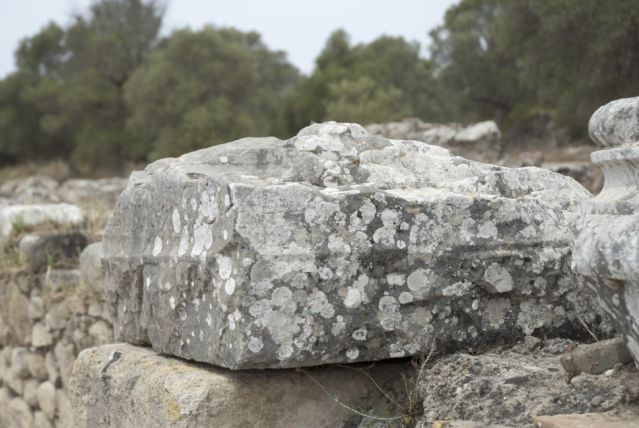
Fragment of base for statue of the senator Anicius Claudius, consul. Gortyna (Creta). 382-383
Record details
Photographs
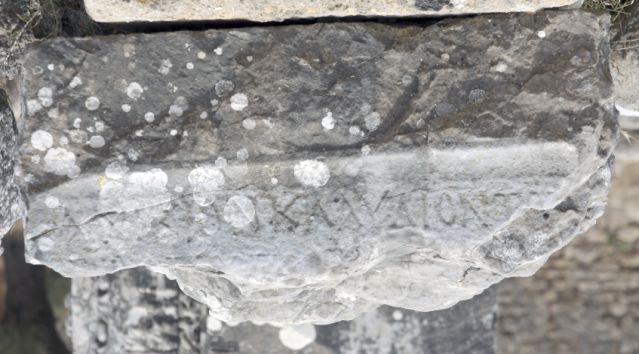
Inscription
Ἀνίκιον Κλαύδιον, τὸ[ν λαμπρότα-] / τ̣ο̣ν̣ ἀ̣π̣̣ὸ̣ ὑ̣π̣[άτων---] [---].
Inscription translation
( ... set this up to) the senator Anicius Claudius the former consul
Bibliography
- Guarducci, M., Inscriptiones Creticae. Vol 4. Tituli Gortynii, Roma 1950, pp. 348-9 no. 322
Discussion
INSCRIPTION
Ἀνίκιον Κλαύδιον, τὸ[ν λαμπρότα-] / τ̣ο̣ν̣ ἀ̣π̣̣ὸ̣ ὑ̣π̣[άτων---] [---].
'(... set up this to) the senator Anicius Claudius the former consul ...'.
Letter height: 3-3.5 cm
DESCRIPTION (from Guarducci 1950, De Tommaso 2000, and the published drawing)
Fragment of the upper part of a rectangular statue base of grey local marble with top-mouldings (according to both Guarducci and De Tommaso, though the drawing published by Guarducci does not show mouldings). Left upper corner with part of left and upper edges preserved. No published photo.
PROVENANCE/ LOCATION
Found in the praetorium of Gortyna. In 1950 it was still in situ (Guarducci 1950).
HONORAND, AND DATE
In material, letter form, and formula, this fragment belongs to the set of honorific monuments for members of the urban Roman aristocracy set up in the late fourth century in the praetorium of Gortyna (LSA-773, LSA-775, LSA-776, LSA-777, LSA-778, LSA-779, LSA-780, LSA-781, LSA-782, LSA-783). Guarducci restored the honorand's office to 'former consul' (ἀπὸ ὑπάτων) which seems justified because the other inscriptions of this group consistently use ἐπάρχος to refer to (praetorian or urban) prefects, rather than the alternative ὑπάρχος.
If our honorand Anicius Claudius (PLRE I, 208 Anicius Claudius 7) is correctly identified as a former consul, some problems arise. In the whole fourth century no consul of that name is documented. One traditional solution to this problem is the hypothesis that our honorand was one of the four consuls from the family of the Anicii in office in the late 4th century, although none of them is otherwise recorded under the name given here (Sextus Claudius Petronius Probus, consul 371 (PLRE I, 736-40 Sex. Claudius Petronius Probus 5); Quintus Clodius Hermogenianus Olybrius, consul 379 (PLRE I, 640-2 Q. Clodius Hermogenianus Olybrius 3); Anicius Hermogenianus Olybrius, consul 395 (PLRE I, 639-40 Anicius Hermogenianus Olybrius 2); Anicius Probinus, consul 395 (PLRE I, 734-5 Anicius Probinus 1). Of these, the consul of 379 Quintus Clodius Hermogenianus Olybrius would appear as the most likely candidate for our man, because his date of office matches that of the other statues set up around 380 in Gortyn to prominent aristocrats of Rome by the governor Oecumenius Dositheus Asclepiodotus. Also his name, which includes the nomen Clodius, comes closest to the name given in our inscription.
Discussion references
- Chastagnol, A., La carrière sénatoriale du Bas-Empire depuis Diocletien, Epigrafia e ordine senatorio, 1. Atti del Colloquio intenazionale AIEGL, Roma 14 - 20 maggio 1981, pp. 167-92, Roma 1982, pp. 173 and 185-6
- De Tommaso, G., Nota su alcune Iscrizioni del Pretorio di Dositeo, Gortina V.1. Lo Scavo del Pretorio (1989-1995) - Vol. V. 1* - , 384-8, Padova 2000, p. 384 no. 3.1, p. 385
- Guarducci, M., Le iscrizioni del pretorio di Gortina, Rivista del R. Istituto d'Archeologia e Storia dell'Arte I, 143-184, Roma 1929, pp. 162-3 no. 11
- Jones, A. H. M. et al., The Prosopography of the Later Roman Empire. Vol. I 260-395, Cambridge et al. 1971 (1975)
Cite: Last Statues of Antiquity, LSA-783 (Francesca Bigi - Ignazio Tantillo - Ulrich Gehn).