
LSA-786
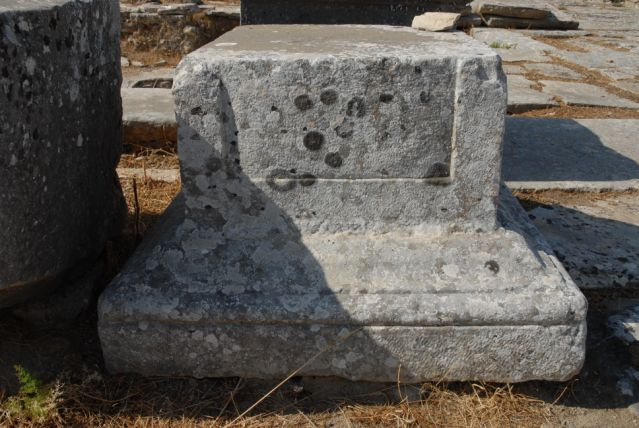
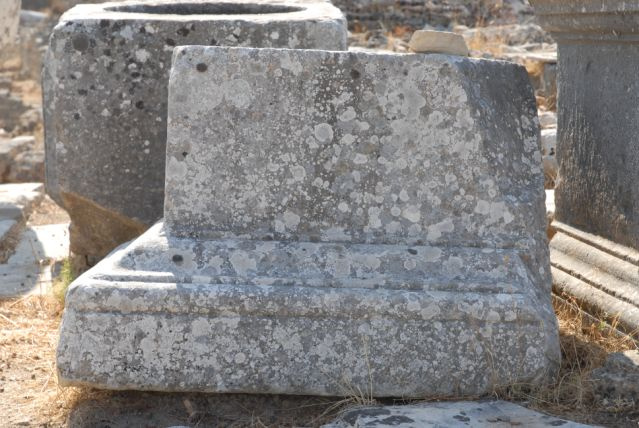
Upper part of base for statue of Pyrrhus, governor of Creta. Gortyna (Creta). Second half of the fourth century
Record details
Photographs
Inscription
Ὁπλότερον Πύρρον, / προτέρῳ ἴσον ἦτορ / ἔχοντα
καὶ γέρας /(4) εὐνομίης κ(αὶ) σοφίης ταμίην [[ε]]/
στῆσε πόλις βουλή τε, γέ/ρας βραχὺ τοῦτο διδοῦσα /
λάινον ἀντ’ ἀγαθῶν / ὧν πόρεν ἀρχόμενοις.
Inscription translation
The city and the council set (this) up (to) the younger Pyrrhus, having the same spirited heart as the older, both the prize of justice and the treasurer of wisdom, giving this small stone as reward for the benefits he gave his subjects
Bibliography
- Guarducci, M., Inscriptiones Creticae. Vol 4. Tituli Gortynii, Roma 1950, no. 324
Discussion
INSCRIPTION
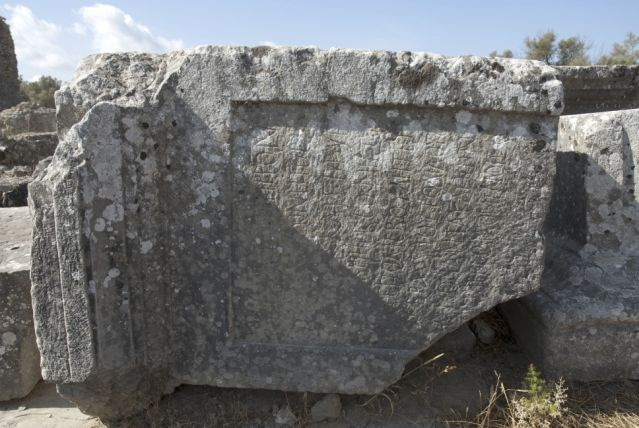
Verse inscription of two elegiac distichs laid out in eight lines:
Ὁπλότερον Πύρρον, / προτέρῳ ἴσον ἦτορ / ἔχοντα
καὶ γέρας /(4) εὐνομίης κ(αὶ) σοφίης ταμίην [[ε]]/
στῆσε πόλις βουλή τε, γέ/ρας βραχὺ τοῦτο διδοῦσα /
λάινον ἀντ’ ἀγαθῶν / ὧν πόρεν ἀρχόμενοις.
'The city and the council set (this) up (to) the younger Pyrrhus, having the same spirited heart as the older, both the prize of justice and the treasurer of wisdom, giving this small stone as reward for the benefits he gave his subjects'.
Letter height 3-3.5 cm.
The inscription praises the justice and beneficence of Pyrrhus towards his subjects. He was rewarded with a stone (i.e. marble) statue (line 3-4: γέρας ... τοῦτο ... λάινον).
DESCRIPTION (from Guarducci 1950 and the published photo)
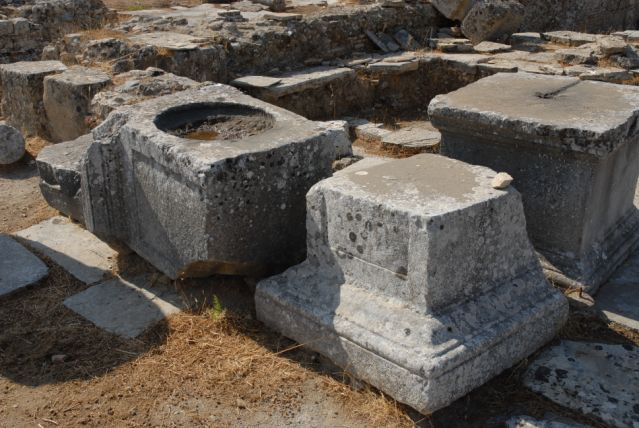
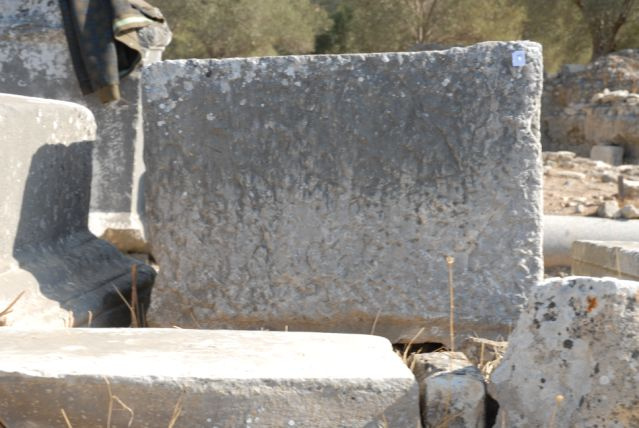
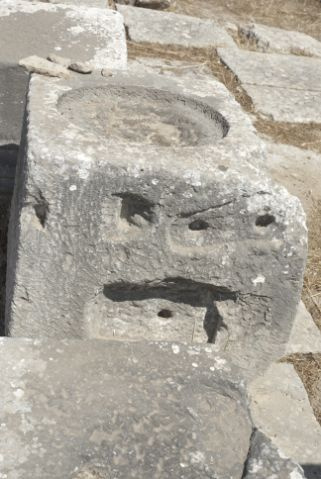
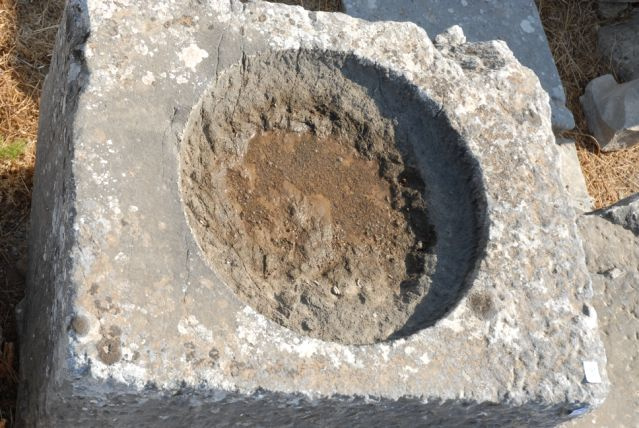
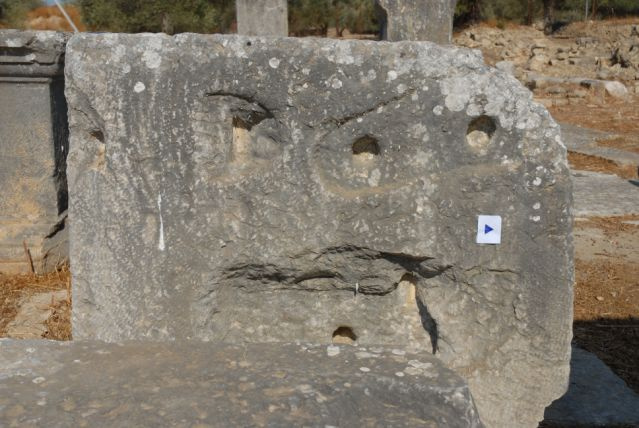
Upper part of a limestone base with moulding at top. The lower part has been cut off horizontally. Broken on top right corner, chipped at bottom left corner and at right edge. There is a prominent crack across the bottom left corner. The epigraphic field is cut back slightly from the surface and surrounded by a simple frame, the surface of the frame being smoothly finished, the surface of the epigraphic field somewhat rougher. On the right face there is a large and shallow round cutout, probably from a later re-use (as an architectural element?)
PROVENANCE/ LOCATION
The base was found in the praetorium in Gortyn. There is no published record of its present location.
HONORAND, AWARDER AND DATE
The honorand Pyrrhus was almost certainly a governor of Creta; the allusions to his justice, wisdom and benevolence towards his subjects, and to the small reward he received, are typical of the late-antique honorific verse inscriptions for governors and other high ranking state officials first studied comprehensively by L. Robert (Robert 1948).
Robert identified the 'younger Pyrrhus', honorand of the present inscription, both as Aemilius Quintilius Pyrrhus the sophist (PLRE I, 756 Aemilius Quintilius Pyrrhus 3) who awarded a statue in Gortyn to the governor (consularis) Oecumenius Dositheus Asclepiodotus (LSA-774), and as the 'Pyrrhus' who took charge of the erection of a statue to another governor, Marcellinus, also in Gortyn (LSA-785) (Robert 1948, 89-92, 100). However, while the statue to Marcellinus can be dated with reasonable confidence to the mid-4th century (with a probable terminus ante quem of 365), that to Asclepiodotus is securely datable some twenty to thirty years later, to 382/3. It is therefore very unlikely that all three 'Pyrrhi' are the same man.
The honorand of our inscription is styled 'the younger Pyrrhus', so it is possible that it was his father, also called Pyrrhus, who awarded the statue to Marcellinus (LSA-785) in the mid-4th century, while our man is Aemilius Quintilius Pyrrhus the sophist, who set up the statue to Asclepiodotus in 382/3 (LSA-774).
The apparent presence of two men called Pyrrhus, father and son, in Gortyn in the fourth century, suggests that they were members of a prominent local family. Precisely when our man held the governorship of Creta, as implied by our inscription, is unclear. Possibly, as PLRE I supposed, he was a successor of Asclepiodotus, and therefore a governor in, or after 383; but it is also possible that he was governor earlier, setting up the statue to Asclepiodotus when in retirement in his home town.
Discussion references
- Robert, L., Epigrammes du Bas-Empire (Hellenica IV), Paris 1948
Cite: Last Statues of Antiquity, LSA-786 (Francesca Bigi - Ignazio Tantillo - Ulrich Gehn).