
LSA-788
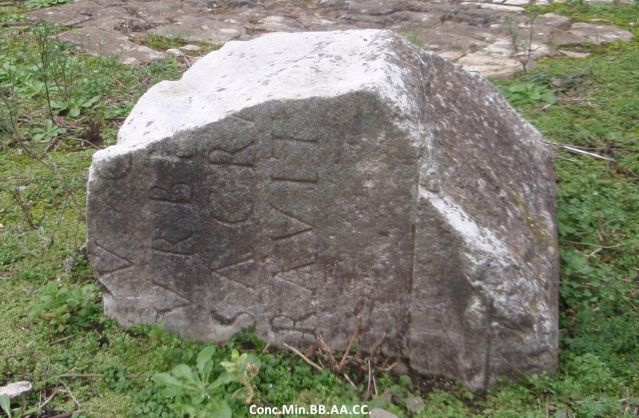
Fragmentary base for statue set up by a prefect of the City. Rome, Forum of Caesar. Fourth-Fifth centuries
Record details
Photographs
Inscription
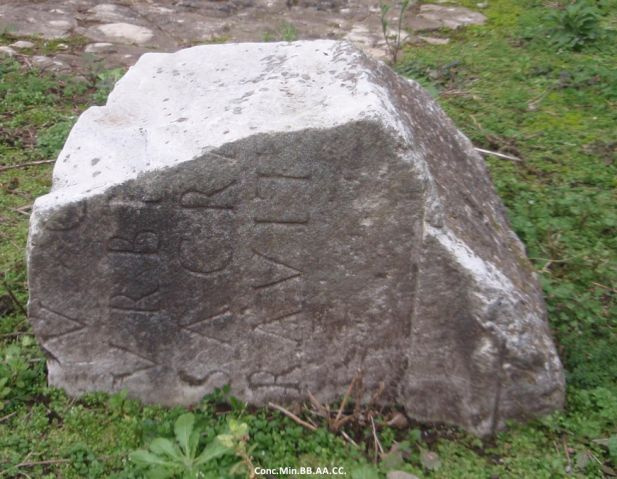
------/ [---] v(ir) c(larissimus) [---?], / [praef(ectus)] (vac.) urbi [---?] / [vice] (vac.) sacra [iudicans] / [c]uravit (vac.).
Inscription translation
(...) of clarissimus rank, (...), urban prefect (...) judge representing the emperor, oversaw this.
Bibliography
- Corpus Inscriptionum Latinarum; , VI, 41358
Discussion
INSCRIPTION
Preserved in fourlines, but certainly originally longer. Letters: 5-5.5 cm.
------/ [---] v(ir) c(larissimus) [---?], / [praef(ectus)] (vac.) urbi [---?] / [vice] (vac.) sacra [iudicans] / [c]uravit (vac.)
'(...) of clarissimus rank, (...), urban prefect (...) judge in place of the emperor, oversaw this.'
DESCRIPTION
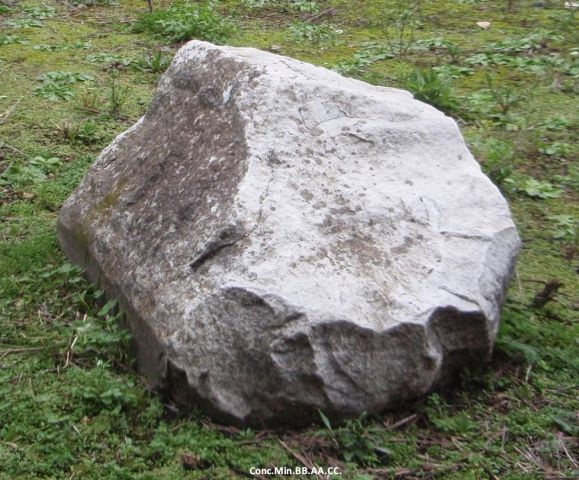
Fragment of the lower part of a white marble base. H 57 cm x W 38 cm x D 70 cm. Damaged on all sides. The lower moulding is partially preserved. The epigraphic field is deep and rough, with irregularities in places, indicating that the base was re-used, with a previous inscription erased. The left side of the base, on which it lies, seems to have been cut, possibly a tertiary use.
PROVENANCE AND CURRENT LOCATION
The fragment was found during excavations at the Forum of Caesar in the early 20th century (Paribeni 1933), where it still is.
DATE
The style of the letters is clearly late, but it is impossible to be more specific.
HONORAND AND AWARDER
Although fragmentary, the inscription refers to a dedication made by a prefect of the city. The verb curare is used in dedications of statues restored or moved from one part of the city to another, a practice that was common in Late Antiquity (Lepelley 1994).
Discussion references
- Lepelley, C., "Le musée des statues divines. La volonté de sauvegarder le patrimoine artistique paien à l'époque théodosienne", Révue Archéologique 42, 1994, pp. 5-15
- Paribeni, R., "Iscrizioni dei Fori Imperiali", Notizie degli Scavi di Antichità, 1933, 445
Cite: Last Statues of Antiquity, LSA-788 (Carlos Machado).