
LSA-828
Base for statue of Constantine I or Constantine II, emperor. Aidepsus (Achaea). 310-340
Record details
Photographs

Inscription
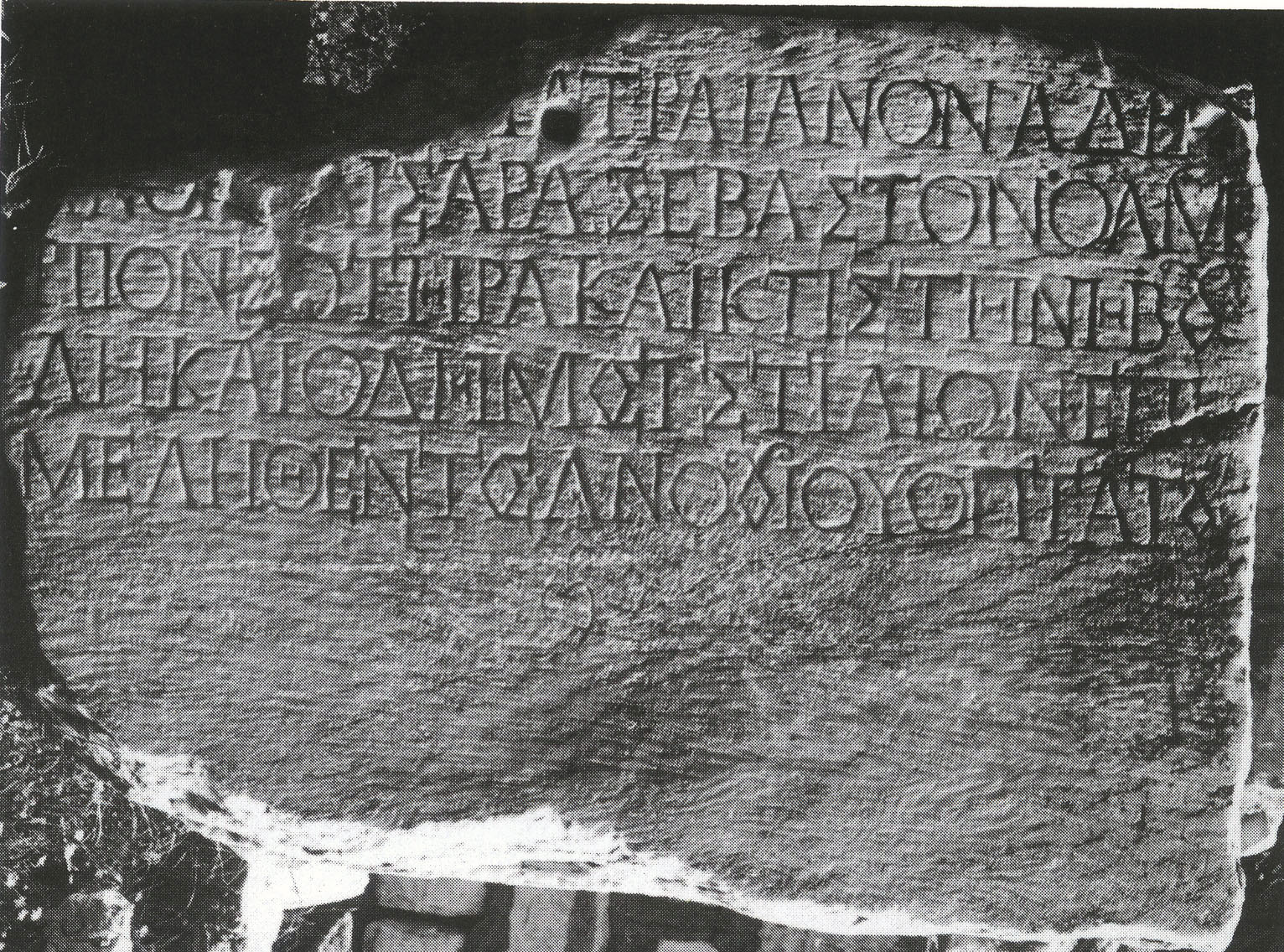
Τὸν ἐπιφανέστατον / Αὔγουστον Κωνσταντεῖνον / ἡ πόλις Αἰδηψηνῶν / [ἐκ τῶν αὑτῆς] πόρω[ν]. - Ἑστιαιῶν ἡ πόλις.
Inscription translation
The city of the Aidepsians (set this up to) the most noble Augustus Constantine from their own revenues. The city of the Hestians.
Bibliography
- Inscriptiones Graecae, XII, 9, 1234 B
Discussion
INSCRIPTION
In four lines:
Τὸν ἐπιφανέστατον / Αὔγουστον Κωνσταντεῖνον / ἡ πόλις Αἰδηψηνῶν / [ἐκ τῶν αὑτῆς] πόρω[ν]. - Ἑστιαιῶν ἡ πόλις.
‘The city of the Aidepsians (set this up to) the most noble Augustus Constantine from their own revenues. The city of the Hestians’.
Letter height not recorded.
DESCRIPTION (from Inscriptiones Graecae (IG) XII, 9 and Wilhelm 1909)
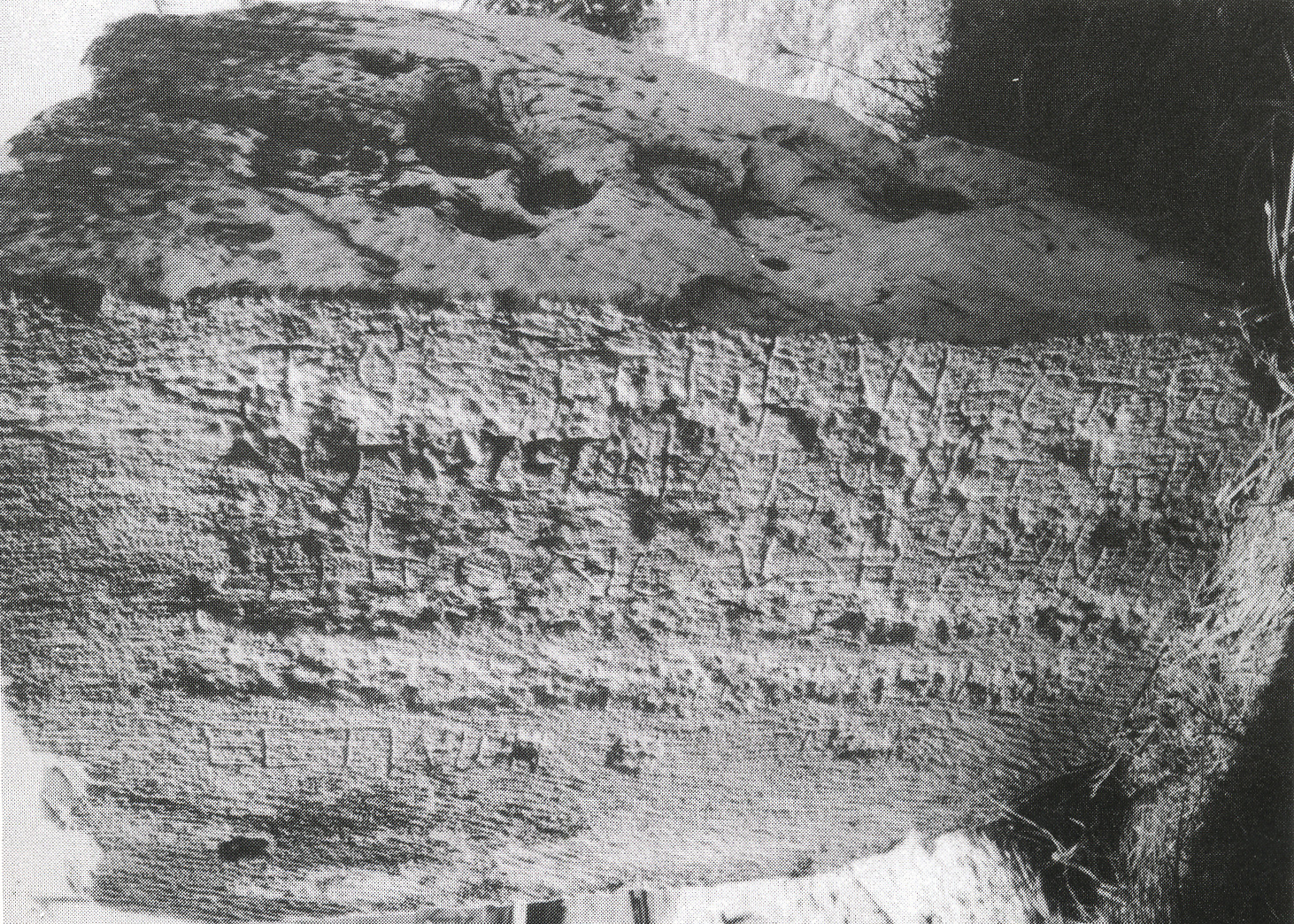
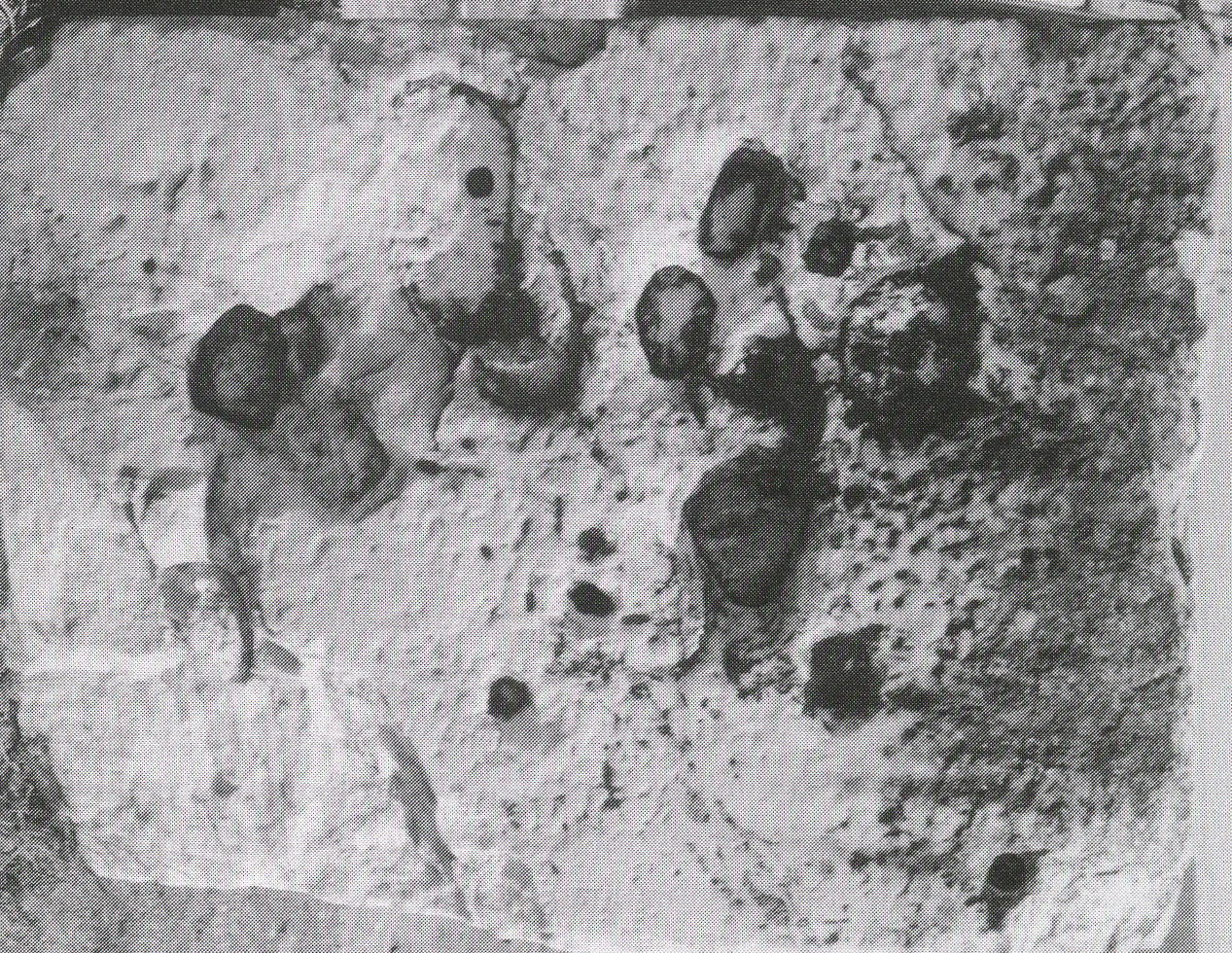
The base is described as being of white marble, 'with imprints of feet of more than one statue on top', by IG ('in superficie vestigia pedum non unius statuae', Wilhelm 1909, 126: 'Fußspuren, die auf mehrfache Benützung deuten'). Nothing is said by IG and Wilhelm about the orientation of these imprints. Our measurements (H 64 cm, W 92 cm, D 71 cm) are those given by Wilhelm 1909 (who is followed by IG); slightly different measurements appear in Papavasiliou 1907.
Our dedication to Constantine dates from a third use of this base. On the back side is an honorific inscription for Hadrian (IG XII, 9, 1234 A). On our side of the base, an earlier inscription was erased to make way for the dedication to Constantine, of which only the final line is preserved: ( Ἑστιαιῶν ἡ πόλις - ‘The city of the Hestians’, another way of referring to Aidepsus).
The inscription to Constantine is in irregular lettering, with rounded forms (Wilhelm 1909, 127).
PROVENANCE AND CURRENT LOCATION
The base was discovered in the modern wall of a vineyard in Edipsos, at the foot of the hill of the Hagioi Anagyroi, in the area of the Roman baths. There is no published record of its present location.
HONORAND AND DATE
The honorand is either Constantine I, or his son Constantine II. Constantine I was Augustus 306-37, but fully recognized in the East only from 310 (Kienast 1996), hence our terminus post quem. Constantine II was Augustus 337-40.
The inscription was set up by the city of Aidepsus; one line of the older inscription styling Aidepsus the 'city of the Hestians' was obviously deliberately spared from the erasure. Hestia was a goddess associated with fire; the mythical allusion refers to the famous hot springs of the city.
Discussion references
- Kienast, D., Römische Kaisertabelle. Grundzüge einer römischen Kaiserchronologie, Darmstadt (2)1996, 298-9
- Papavasiliou, G. A., Επιγραφαί Αιδεψού, Ephemeris Archaiologike 3, 11-18, Athens 1907, 12 no. 2
- Wilhelm, A., Beiträge zur Griechischen Inschriftenkunde, Wien 1909, 126-7 no. 114
Cite: Last Statues of Antiquity, LSA-828 (Ulrich Gehn).