
LSA-844
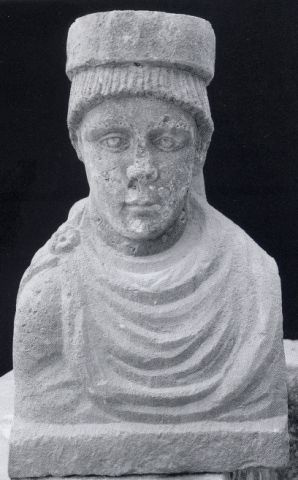
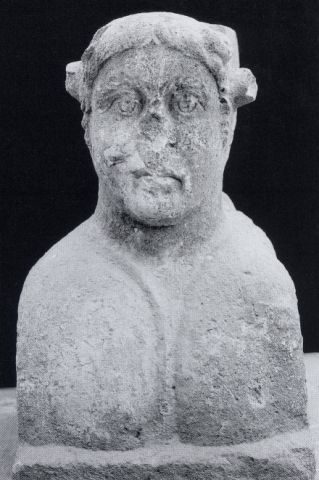
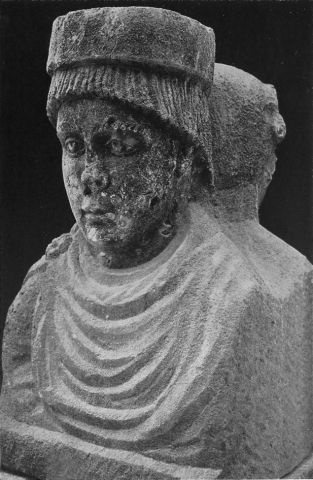
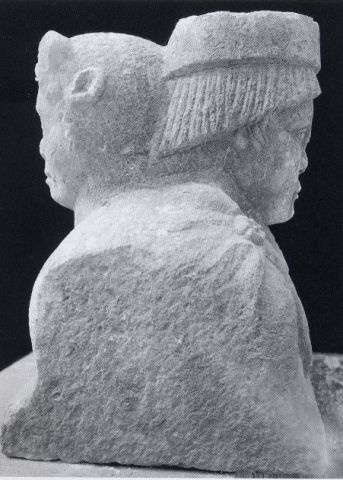
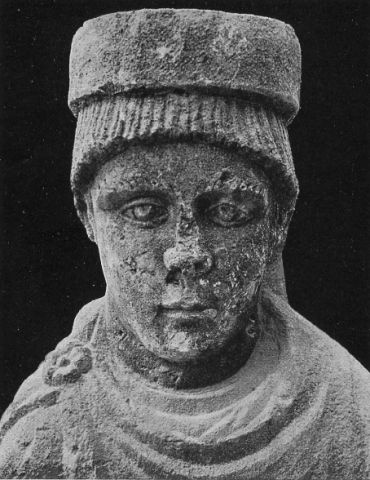
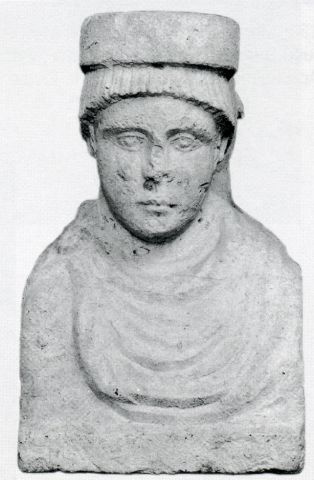
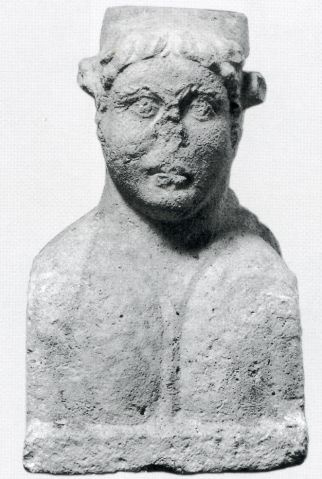
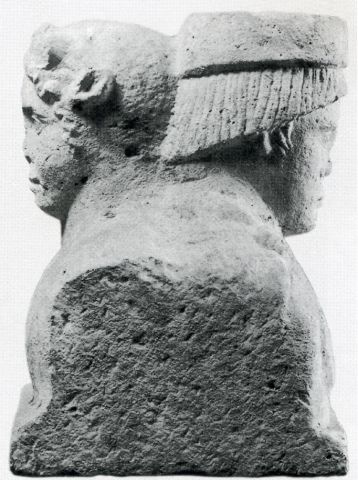
Double herm with portrait of emperor in military cap and river god? Salona (Dalmatia). Early fourth century?
Record details
Photographs
Bibliography
- Cambi, N., Imago Animi. Antički Portret u Hrvatskoj, Split 2000, 181-2, 405, no.132, pl. 175
- L'Orange, H. P., Das spätantike Herrscherbild von Diokletian bis zu den Konstantin-Söhnen, 284-361 n. Chr. Das Römische Herrscherbild. III. Abteilung ; Bd. 4 , Berlin 1984
- L'Orange, H. P., Studien zur Geschichte des spätantiken Porträts, Oslo 1933
Discussion
DESCRIPTION (Object)
Double bust of grey limestone, H 67 cm. One face is a human portrait, the other one a composite being with a human face and bull’s horns, ears and body. The bust includes the upper arms and breast of the human figure, and the breast of the bull. It is set on a rectangular plinth of some cm height which protrudes slightly at the front and rear. The right side is roughly finished, the left side finished with a claw. The nose of the human figure is chipped off, and there are chips scattered over the surface. Both horns of the composite being are broken, the right one completely with the adjacent portion of the head. The tip of the nose and the lips are chipped, the lower left corner (from viewer) of the plinth is broken.
The marking of hair, eyes, folds of the garment and animal features of the bull are the same as in LSA-843.
PROVENANCE AND CURRENT LOCATION
The herm was first recorded, together with its counterpart LSA-844, by L’Orange 1931 in a private house in the area of Diocletian’s palace in Spalato (Im Dorf Solin (Salona) auf einer Terasse des Hauses Pepo Sperać); his assumption that it was originally from Diocletian’s palace never been challenged since. It is today in the Solin Museum, without published inv. no.
DESCRIPTION (Subject)
The human portrait depicts a young man with an oval face. He is clean shaven and without folds or wrinkles. He is wearing his hair in a caplike style, confined by a straight line from the neck to the brow. The hair is lank and brushed forward from the centre of the skull. The ears are only partly covered, in front of each a curl is hanging down. On his head he is wearing a flat round military cap (pilleus pannonicus). He is dressed in a tunic (indicated by some folds on the right arm) and a cloak (chlamys) which is fixed on the right shoulder by a four-leaved disc-fibula with a central knob.
The hair of the composite being falls in thick curls into the brow; it is parted above the centre of the brow. Its human face is clean shaven and youthful without folds or wrinkles; horns, ears, thick neck and the strong breast with the stylized dewlap add animal features to it.
HONORAND AND DATE
L’Orange 1931, the first publisher, suggested that the busts were representations of the tetrarchs, the human figures the two Augusti; he thought that his bust no 2 (LSA-843) represented Diocletian, hence our bust Maximian (L’Orange 1931, 43-4). L’Orange 1984 suggested a representation of emperors together with a horned river god as personification of fertility; he maintained the identification of the human figures proposed in 1931 (L’Orange 1984, 12. 25).
L’Orange’s interpretation was not unanimously accepted, but was challenged in detail for the first time by Zuchtriegel 2005 who argued that the hairstyle and the clean-shavenness indicated a date in the Constantinian rather than the tetrarchic era. He proposed to see Constantine and one of his sons in the portrayed; the combination with river gods referred to the securing of the boarders achieved by the emperors.
All identifications so far have presupposed that the herms were honorific monuments in the imperial realm; nothing is known, however, about their function and original setting (for fuller discussion see LSA-843).
Discussion references
- L'Orange, H. P., Das spätantike Herrscherbild von Diokletian bis zu den Konstantin-Söhnen, 284-361 n. Chr. Das Römische Herrscherbild. III. Abteilung ; Bd. 4 , Berlin 1984, 105, pl. 9b and d (Maximian)
- L'Orange, H. P., Studien zur Geschichte des spätantiken Porträts, Oslo 1933, 19-21, figs. 37 and 40
- Zuchtriegel, G. 'Zu Datierung und Deutung der Doppelhermen von Solin', Archäologischer Anzeiger , 2005 (vol. 2), 17-25 figs. 1, 3, 5 (Constantine and sons)
Cite: Last Statues of Antiquity, LSA-844 (Ulrich Gehn).