
LSA-893
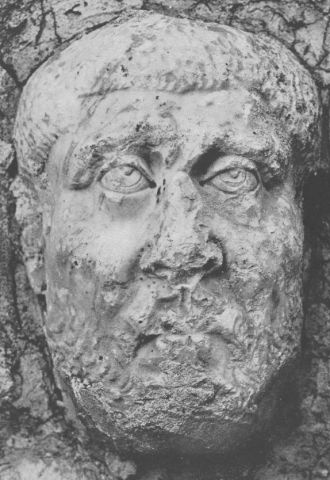
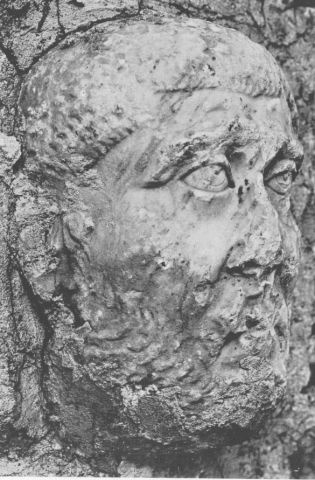
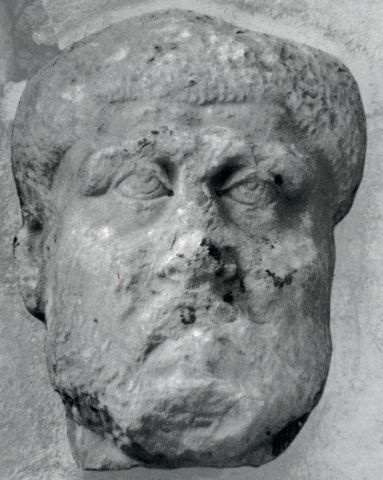
Portait head of large-faced man with short hair and beard. From Salona (Dalmatia). Late third to early fourth century.
Record details
Photographs
Bibliography
- Cambi, N., Imago Animi. Antički Portret u Hrvatskoj, Split 2000, 178-9, 397, no. 124, pl.167
- L'Orange, H. P., Das spätantike Herrscherbild von Diokletian bis zu den Konstantin-Söhnen, 284-361 n. Chr. Das Römische Herrscherbild. III. Abteilung ; Bd. 4 , Berlin 1984, 36. 102 pl. 23 d
- L'Orange, H. P., Studien zur Geschichte des spätantiken Porträts, Oslo 1933, 38 (270s-280s), 123, no. 54, figs. 100-101
Discussion
DESCRIPTION (Object)
Marble head, broken at neck, H 21 cm. Eyebrows, nose, lips and chin are chipped, and there are minor chips on hair and cheeks.
The hair is rendered as a flat cap lying on the skull. It is set off the flesh by a clear-cut line; single strands are marked by short chisel strokes. The beard is marked by short chiselled lines, but is not set off the flesh in the same way as the hair.
Pupil and iris are circumscribed by concentric incised lines.
PROVENANCE AND CURRENT LOCATION
The head was found in the area of the amphitheatre at Salona (the southern part of the amphitheatre according to L'Orange 1984, 102). It was recorded built into a wall of the Jurić house in Vranjic by Cambi 2000, 178; L'Orange 1984, 102 recorded it built into a wall of the house of Beppina Aljinović.
DESCRIPTION (Subject)
Mature man with short, but dense hair and trimmed beard; deep folds surround his eyes and mouth. The strong jawbones and the narrow eyes are possibly individual features of the portrayed.
HONORAND AND DATE
The cubic head type and the hairstyle and beard point to a date in the tetrarchic period of the late 3rd/ early 4th century. A date not earlier than the late 3rd century is supported by the rendering of the eyes.
Cambi 2000, 179. 204 suggested to identify the portrayed with the emperor Constantius I; L'Orange 1984, 36 considered an unidentified imperial portrait of the later tetrarchy.
Cite: Last Statues of Antiquity, LSA-893 (Ulrich Gehn).